2026 Best Automated Case Packer Solutions for Global Buyers
The demand for efficient packaging solutions is ever-increasing in today's fast-paced market. Automated Case Packers are at the forefront of this evolution. They enhance productivity and minimize labor costs, making them vital for businesses seeking to improve their operations.
In 2026, the landscape of Automated Case Packers continues to diversify. Global buyers are presented with a range of advanced solutions, each tailored to meet specific needs. It is essential to understand the nuances of these technologies. Not every Automated Case Packer will serve all applications equally well. Hence, careful evaluation is crucial.
Buyers must consider factors such as speed, flexibility, and ease of integration. Not all products can be packed using the same machinery. Some Automated Case Packers excel in specific environments, while others might struggle. Understanding these differences helps in selecting the right equipment for your business. Investing in the right Automated Case Packer ultimately leads to greater efficiency and profitability. However, potential customers need ongoing support and training to maximize their system's capabilities.
Overview of Automated Case Packing Technology in 2026
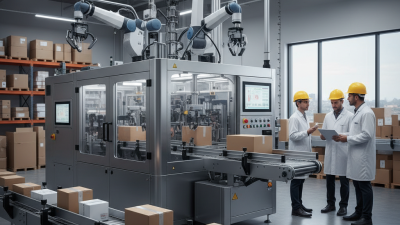
Automated case packing technology is rapidly evolving, offering significant benefits in efficiency and labor reduction. In 2026, this technology integrates advanced robotics and artificial intelligence. These systems automatically load products into packages with impressive speed and precision. The result is a streamlined process that reduces the potential for human error. However, some challenges remain.
Despite advancements, not all solutions fit every industry. Certain products require unique packaging needs. Customization is essential, but it can also complicate the implementation of automated systems. Companies often struggle to balance between standardization and flexibility. Identifying the right technology requires thorough analysis and understanding of specific requirements.
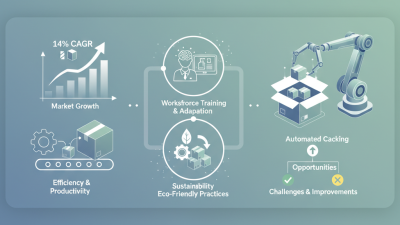
Training staff to operate and maintain these systems is another crucial consideration. Many firms underestimate the learning curve associated with new technologies. This can lead to underutilization and frustration among workers. Ensuring that employees are proficient is vital for maximizing the investment in automated case packing solutions. As technology moves forward, the potential for improvement continues to grow, but it requires careful thought and planning.
Key Features to Consider in Automated Case Packers
Automated case packers have transformed the packaging industry.
Global demand for these solutions continues to rise, driven by efficiency needs.
According to a recent market report, the automated packaging machinery market is expected to grow by over 25% by 2026.
Key features are critical for choosing the right machine.
Flexibility is essential. A case packer should handle various box sizes and shapes.
This adaptability helps businesses cater to diverse product lines.
Speed and throughput are vital too. Machines that operate at high speeds minimize downtime and maximize efficiency.
For instance, units that reach up to 60 cases per minute can significantly enhance productivity.
Another important consideration is ease of use.
Operators should find it intuitive. Complex machines may lead to training difficulties.
Maintenance also plays a role. Regular upkeep is necessary to prevent unexpected breakdowns.
Some models may require more attention than others, affecting long-term reliability.
As businesses seek to improve productivity, these nuances in choice can shape overall performance.
Top Automated Case Packer Solutions for Global Markets
In today's fast-paced global markets, automated case packers are crucial. They efficiently handle packaging tasks, reducing labor costs and increasing productivity. Manufacturers now prioritize
speed and accuracy in their processes. This shift highlights a growing need for reliable technology in packaging operations.
Selecting the right automated case packer is essential. Buyers must consider factors like production volume, product types, and space constraints. Not all solutions fit every operation, leading to costly mistakes. It's vital to assess compatibility with existing systems and workflow. Customized solutions are often necessary.
While automated solutions bring many benefits, they also present challenges. Initial investments can be high, and training employees requires time. Maintenance is another critical factor. Organizations must commit to ongoing support to ensure longevity. The journey to optimal packaging solutions is often complex, but with careful planning, success is within reach.
Comparative Analysis of Leading Brands in 2026
In 2026, automated case packers are becoming essential for manufacturing and logistics. These machines enhance efficiency and accuracy in packaging. A detailed comparative analysis of leading solutions reveals key factors for global buyers.
When examining various automated case packers, speed and flexibility emerge as critical components. Machines that can adapt to different package sizes save time and reduce downtime. Additionally, energy efficiency is crucial; machines that consume less power can significantly lower operational costs. Buyers should also consider the ease of integration with existing production lines.
However, not every machine performs perfectly under diverse conditions. Some may struggle with fragile products. Others require more maintenance, which can impact production schedules. Evaluating user experiences can provide valuable insights. It's important to reflect on these aspects before making a decision. Exploring various options allows businesses to find the right balance between efficiency and reliability.
Future Trends in Automated Case Packing Solutions
As the demand for automated case packing solutions rises, several trends are shaping the future of the industry. One significant development is the integration of artificial intelligence. AI enhances efficiency through advanced algorithms that optimize packing patterns. This evolution allows for swift adjustments to changing product lines, reducing downtime significantly.
Another noteworthy trend is the emphasis on sustainability. Manufacturers are increasingly focused on eco-friendly materials and practices. This shift not only meets consumer demand but also aligns with global sustainability goals. Companies are adopting recyclable packaging materials and energy-efficient machines. Adopting these innovations can be challenging, yet they lead to better long-term outcomes.
Lastly, data analytics is becoming more prevalent in case packing systems. Collecting and analyzing real-time data helps identify bottlenecks and improve productivity. However, this requires careful consideration of data privacy and security. Without proper measures, sensitive information may be exposed. These evolving trends will demand ongoing reflection and adaptation from companies to truly harness their potential.
2026 Best Automated Case Packer Solutions for Global Buyers
| Model |
Max Packing Speed (cases/min) |
Dimensions (LxWxH cm) |
Weight (kg) |
Power Consumption (kW) |
Key Features |
| Model A |
30 |
200 x 150 x 180 |
350 |
5.5 |
High-speed operation, Energy-efficient |
| Model B |
25 |
220 x 160 x 190 |
400 |
6.0 |
Compact design, Flexible configuration |
| Model C |
35 |
250 x 170 x 200 |
500 |
7.5 |
Advanced robotics, Intuitive interface |
| Model D |
20 |
210 x 155 x 175 |
300 |
4.0 |
User-friendly, Low maintenance |