5 Essential Tips for Choosing an Automatic Case Packer?
Choosing the right Automatic Case Packer is crucial for any manufacturing process. According to industry expert John Marino, "Investing in the right packing solution can streamline operations significantly." This highlights the importance of making an informed choice.
An Automatic Case Packer can revolutionize packaging efficiency. However, selecting the wrong system can lead to wasted resources and operational delays. Different products and production lines require tailored solutions. Thus, understanding the specific needs of your operation is vital.
Experts recommend evaluating factors like speed, reliability, and flexibility. Also, it’s important to consider your future needs, as the right Automatic Case Packer should grow with your business. Reflecting on past experiences can offer valuable insights. Investing time in research ensures that you make a choice that enhances your productivity and effectiveness.
Understanding Your Packaging Needs and Requirements
When selecting an automatic case packer, understanding your packaging needs is crucial. Each product is unique, and its packaging requirements vary. You must evaluate your product dimensions, weights, and the materials you’ll use. Consider how your product will be placed into the case. The design of the packer should meet these specific requirements.
Tip 1: Assess your product types. Different items may require different packing methods. This assessment will help in choosing a machine that fits your needs without compromise.
Tip 2: Evaluate the production speed necessary for your operations. What volume of product will you be packing daily? Selecting a machine with appropriate throughput is essential but it must match your future growth plans too.
It's important to recognize that even the best machines may not suit every situation. Often, adjustments and learning curves are needed to refine the process. Be prepared for some trial and error. Analyzing past packaging experiences can guide you in making the right choice. Also, consulting industry experts for custom solutions could provide valuable insights into increasing efficiency.
5 Essential Tips for Choosing an Automatic Case Packer
This chart displays the importance of different factors when choosing an automatic case packer based on a scale of 1 to 10.
Evaluating Different Types of Automatic Case Packers
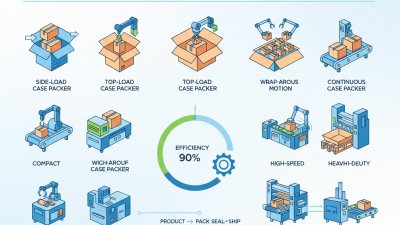
When evaluating different types of automatic case packers, several factors come into play. The type of product is crucial. For liquids, a packer should handle spills. For fragile items, gentle handling is essential. Each product demands a tailored approach.
One vital tip is to assess the machine's flexibility. Can it adapt to various case sizes? A versatile machine reduces downtime and increases productivity. Insufficient versatility can lead to frequent adjustments and delays. The right choice should allow for quick changeovers.
Another consideration is the mechanical design. Some case packers offer a more straightforward interface. This may reduce operation errors. However, a complex design might provide additional features. Operators may need training, which adds costs. Investing time in understanding these systems can prevent issues in the long run. Remember, each plant's needs differ. Select a machine that aligns with your specific operational requirements.
Assessing Production Speed and Efficiency of the Equipment
When assessing the production speed and efficiency of automatic case packers, several factors come into play. One key metric is the speed of the equipment, typically measured in cases per minute (CPM). Industry standards show that a well-optimized automatic case packer can achieve speeds ranging from 20 to 120 CPM, depending on the type of product and packaging design. Evaluating these metrics is crucial for aligning packing operations with overall production goals.
Efficiency also hinges on the machinery's adaptability. A flexible case packer can accommodate various packaging formats and sizes, which is essential in fast-paced manufacturing settings. Reports indicate that operations utilizing adaptable machinery see a 20-30% reduction in downtime. However, the trade-off may involve higher initial investments and the need for regular maintenance.
In addition to speed and flexibility, consider automation integration. Systems that seamlessly connect to existing production lines enhance overall efficiency. According to recent studies, enhanced automation can lead to a productivity increase of up to 50%. Nevertheless, companies must be cautious about over-automation that can lead to worker displacement, raising ethical considerations within the workforce. Thus, a balanced approach is essential for sustainable growth.
Considering Flexibility and Adaptability for Product Variations
When selecting an automatic case packer, flexibility and adaptability are crucial. The ability to package various product sizes and types can significantly impact operational efficiency. According to a report by PMMI, 74% of manufacturers emphasized the need for machinery that can easily adjust to different packaging formats.
Modern automatic case packers should accommodate a variety of product shapes and weights. This adaptability ensures minimal downtime during product changeovers. A 2022 study indicated that companies utilizing flexible packaging solutions experienced up to 20% more output. However, achieving this flexibility often requires complex programming and adjustments, which can lead to challenges. Maintenance and operator training are also essential to maximize performance and minimize errors.
Investing in equipment that offers modular design can provide both flexibility and reliability. Such systems can be adapted as market demands change. However, frequent adjustments and modifications can introduce uncertainties in the production line. Striking a balance between adaptability and efficiency remains a challenge for many manufacturers. Tracking performance metrics over time can help to identify areas needing refinement. This approach aids in aligning equipment capabilities with ever-evolving production needs.
5 Essential Tips for Choosing an Automatic Case Packer
| Tip |
Description |
Key Considerations |
| Assess Flexibility |
Choose a packer that can handle various product sizes and shapes. |
Adjustable settings, changeable parts. |
| Consider Throughput |
Evaluate the speed and efficiency for your production needs. |
Production rate, downtime. |
| Ease of Changeovers |
Check how quickly and easily the machine can be adjusted for different products. |
Tool-less adjustments, time for reconfiguration. |
| Integration with Existing Systems |
Ensure compatibility with your current equipment and software. |
Connectivity options, software compatibility. |
| Future-Proofing |
Select a packer that can adapt to future product changes and market needs. |
Scalability, upgrade options. |
Analyzing Budget and Total Cost of Ownership for Equipment
When analyzing the budget for an automatic case packer, understanding the total cost of ownership (TCO) is essential. TCO goes beyond the initial purchase price. It includes installation, maintenance, and operational costs over the equipment's lifespan. According to a 2022 industry report, TCO can be up to three times the original cost of the equipment. This means a lower purchase price may not always be the best value.
Consider the impact of energy efficiency as well. A report from the Packaging Machinery Manufacturers Institute reveals that energy consumption can account for 15-20% of operational costs. Investing in energy-efficient models can lead to substantial savings over time. However, these models often come with a higher upfront cost. Evaluating energy costs is crucial for long-term financial health.
Training staff on new equipment should also be factored into the budget. Inadequate training can lead to increased downtime and maintenance costs. Poor operator skills can result in damage and inefficiencies that are hard to quantify. Therefore, allocating resources for comprehensive training is a wise investment. Balancing these factors requires careful analysis and a clear understanding of long-term operational needs.