Industrial dust is not merely a housekeeping problem. It can obscure sensors, clog filters, damage motors, and expose workers to hazardous particles. The U.S. Occupational Safety and Health Administration limits respirable crystalline silica exposure to 50 micrograms per cubic meter over an eight-hour shift. Its action level is 25 micrograms. These figures make effective control a measurable engineering responsibility.
Market demand is also rising. MarketsandMarkets estimates that the global dust control systems market could grow from approximately $17.1 billion in 2023 to $24.6 billion by 2028. Automation supports this growth through differential-pressure sensors, variable-speed fans, filter alerts, and remote performance tracking. Bill Pentz, a widely cited dust-collection educator and engineer, states, “The filter is the heart of the dust collector.” His warning remains practical. A powerful fan cannot compensate for poor filtration, leaking ductwork, or neglected maintenance.
This guide examines 10 Best Automated Dust Collection Systems for Industry. Each option is considered through airflow, capture efficiency, energy use, controls, service access, and operating conditions. A packaging plant may need fine-particle filtration, while a woodworking facility may prioritize spark control and rapid debris separation. No system wins everywhere. That is the uncomfortable part.
Real performance depends on installation quality. A polished specification sheet does not guarantee clean air. Operators should verify airflow at the pickup point, inspect filter loading, and record pressure changes over time. The strongest choice is not always the largest collector. It is the system that performs consistently beside real machines, during real production, under real maintenance constraints.
Industrial dust collection protects workers, equipment, and production stability.
Its purpose is simple: capture airborne particles near the source. A reliable system also limits buildup on floors, ducts, and machinery. In practice, I check particle type, temperature, moisture, airflow, and operating hours before selecting equipment. Fine dust behaves differently from heavier chips. That distinction matters. The 10 best automated systems should be judged by application fit, not appearance or advertised capacity.
Automation adds sensors, variable-speed fans, filter monitoring, pulse cleaning, and alarms. Pressure sensors can show when filters need attention. Airflow controls may reduce energy use during idle periods. Remote dashboards help maintenance teams identify unusual trends early. However, automation cannot replace commissioning or inspections. I have seen accurate sensors report poor collection because a hood was positioned incorrectly. Human review still matters. No setup is perfect. Settings may need adjustment as materials, shifts, and production rates change.
Tips: Keep capture points close to emission sources. Record baseline airflow and pressure readings. Test alarms during planned maintenance. Inspect ducts for leaks and buildup. Train operators to question unusual noise, dust, or pressure changes. Do not assume “automatic” means maintenance-free. Follow applicable safety standards and qualified engineering guidance.
10 Best Automated Dust Collection Systems for Industry
Key Criteria for Evaluating Automated Dust Collection Systems
Selecting an automated dust collection system requires more than comparing airflow numbers. Start with the dust profile, including particle size, moisture, temperature, and production volume. Fine powder may demand tighter filtration than heavier chips. Dust never behaves perfectly. Real production data matters more than a brochure estimate.
Evaluate airflow at the pickup point, not only at the collector outlet. Duct length, bends, leaks, and simultaneous machine use can reduce performance. A reliable system should maintain stable capture under changing workloads. Variable-speed fans can reduce energy use, but poor controls may create frequent pressure swings. Ask for measured performance, testing methods, and expected operating ranges.
Filtration efficiency is important, yet filter life and cleaning performance deserve equal attention. Automatic pulse cleaning should respond to pressure readings rather than run continuously. Inspect the sensor location, alarm logic, and access for safe maintenance. Remote monitoring can reveal rising pressure or blocked ducts early. However, connected controls still need manual verification. Sensors drift. Operators should review trends and inspect filters regularly.
Consider noise, footprint, waste handling, and emergency shutdown functions before installation. The system must fit existing equipment without creating difficult access points. A practical evaluation also includes maintenance hours, replacement parts, training, and total energy consumption. Some projections look impressive until leaks appear. A site trial or documented reference measurement can expose those weaknesses before full deployment.
| No. | Automated System Type | Typical Industrial Application | Indicative Airflow Range | Primary Filtration Method | Automatic Cleaning Method | Typical Filtration Efficiency | Automation and Monitoring | Energy-Control Features | Key Selection Criteria |
|---|---|---|---|---|---|---|---|---|---|
| 1 | Central Cartridge Dust Collector | Metalworking, woodworking, plastics processing, and general manufacturing | 2,000–30,000 m³/h | Pleated cartridge filters using cellulose, synthetic, or nanofiber media | Automatic pulse-jet cleaning controlled by differential pressure | Typically 99.9% or higher for rated test particles when correctly configured | PLC control, differential-pressure sensor, high-temperature alarm, filter-status indication, and remote fault output | Variable-frequency drive, demand-based fan control, and automatic zone dampers | Filter surface area, dust loading, pressure drop, spark protection, noise level, and access for cartridge replacement |
| 2 | Pulse-Jet Baghouse Collector | Bulk solids handling, cement, minerals, grain processing, and heavy-duty production lines | 5,000–150,000 m³/h | Fabric filter bags made from polyester, aramid, acrylic, or other application-specific media | Compressed-air pulse cleaning with sequential valve control | Commonly 99.5%–99.99%, depending on media, dust properties, and operating conditions | Programmable cleaning timer or pressure-based cleaning, hopper-level sensor, temperature monitoring, and alarm outputs | Fan speed control, optimized pulse intervals, and automatic isolation of unused branches | Air-to-cloth ratio, bag material, hopper design, compressed-air consumption, explosion protection, and dust discharge method |
| 3 | Cyclone Pre-Separator with Fine-Filter Stage | Wood chips, coarse particles, foundry dust, agricultural materials, and high-load processes | 2,000–50,000 m³/h | Inertial cyclone separation followed by cartridge or bag filtration | Automatic pulse cleaning on the secondary filter stage | Approximately 95%–99% for coarse particles before final filtration; higher overall efficiency with a properly selected secondary filter | Airflow sensor, differential-pressure monitoring, rotary-valve status, and bin-full alarm | Reduced filter loading through pre-separation and automatic fan modulation | Particle-size distribution, abrasive content, pressure loss, material recovery needs, and available installation height |
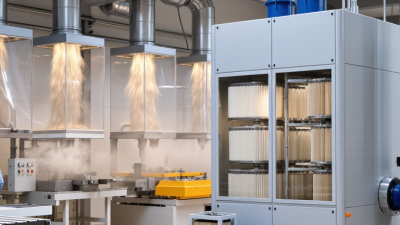
| 4 | Downdraft Table with Integrated Filtration | Grinding, sanding, deburring, welding preparation, and small-part finishing | 1,500–12,000 m³/h per workstation | Spark-resistant pre-separation followed by cartridge or bag filtration | Automatic pulse-jet cleaning based on differential pressure | Typically 99%–99.9% for the designed particle range | Automatic fan start, filter-pressure display, airflow alarm, and optional work-light or interlock control | Variable-speed fan, automatic standby mode, and occupancy or tool-triggered activation | Capture velocity at the work surface, table size, spark management, operator ergonomics, and collected-dust access |
| 5 | High-Vacuum Source-Capture System | Hand tools, robotic grinding, laser processing, laboratory operations, and localized process extraction | 300–4,000 m³/h per extraction point | Multi-stage prefilter, fine cartridge, and optional HEPA final filter | Automatic pulse cleaning or motorized filter-shaker cleaning | Up to 99.97% for 0.3-micron particles when equipped with a certified HEPA stage | Tool activation, airflow verification, filter differential-pressure sensor, and hose or arm blockage alarm | Automatic start-stop, variable-frequency drive, and demand-controlled extraction | Required capture velocity, flexible-hose length, static pressure, spark risk, filter class, and point-of-use mobility |
| 6 | Wet Dust Scrubber | Combustible dust, sticky particulate, hot gases, chemical processing, and applications requiring wet collection | 3,000–100,000 m³/h | Water-based impaction, spray, venturi, or packed-bed separation | Automatic water-level control, spray-nozzle management, and sludge purging | Approximately 95%–99.9%, depending on scrubber design and particle size | Liquid-level sensor, pH or conductivity monitoring, differential-pressure monitoring, and pump-status alarms | Variable-speed fan and pump control based on airflow and process demand | Water consumption, wastewater treatment, corrosion resistance, plume control, pressure drop, and contaminant solubility |
| 7 | Ambient Air Cleaning System | Large workshops where multiple low-intensity dust sources cannot be fully enclosed | 5,000–40,000 m³/h per unit | Reusable prefilter with cartridge, bag, or high-efficiency final filter | Automatic pulse-jet cleaning or timed filter maintenance cycle | Typically 90%–99.9% for recirculated airborne dust, depending on filter grade and room layout | Air-quality sensor, filter-pressure monitoring, programmable schedules, and remote status display | Demand-based fan speed, occupancy control, and automatic night setback | Room volume, air-change rate, dust distribution, recirculation requirements, noise, and compatibility with source capture |
| 8 | Pneumatic Conveying Filter Receiver | Powder transfer, batching, mixing, packaging, and enclosed material conveying systems | 500–15,000 m³/h | Compact cartridge or filter-bag elements integrated into a receiving vessel | Automatic reverse-air or pulse-jet cleaning during conveying cycles | Commonly 99.5%–99.99% for properly selected process dust | High-level sensor, conveying-pressure monitoring, filter differential-pressure alarm, and automatic cleaning sequence | Intermittent operation, automatic fan or blower control, and optimized cleaning intervals | Material bulk density, conveying pressure, filter-area loading, air leakage, discharge valve compatibility, and hygienic design |
| 9 | Explosion-Protected Dust Collection System | Food ingredients, pharmaceuticals, aluminum processing, wood dust, plastics, and other combustible-dust operations | 2,000–80,000 m³/h | Cartridge or bag filtration with conductive or application-specific filter media | Automatic pulse cleaning with controlled isolation and shutdown logic | Generally 99.5%–99.99%, subject to filter configuration and combustible-dust testing | Pressure-relief monitoring, spark detection, temperature sensors, explosion isolation, and emergency shutdown interlocks | Variable-frequency drive, automatic process interlocks, and demand-based operation | Kst and Pmax values, combustible-dust testing, explosion venting, isolation devices, grounding, and applicable safety standards |
| 10 | Modular Multi-Point Dust Collection System | Facilities with several production machines, flexible layouts, or phased capacity expansion | 5,000–100,000 m³/h total system capacity | Central cartridge or bag filtration with engineered duct branches | Automatic pulse cleaning controlled by zone pressure and filter loading | Typically 99.5%–99.99%, depending on the selected final filter and system design | PLC or building-management integration, branch airflow sensors, automated dampers, filter alarms, and performance logging | Demand-controlled ventilation, variable-frequency drive, automatic zone balancing, and scheduled operation | Duct velocity, system balancing, future expansion, simultaneous machine demand, pressure-loss calculations, and maintenance access |

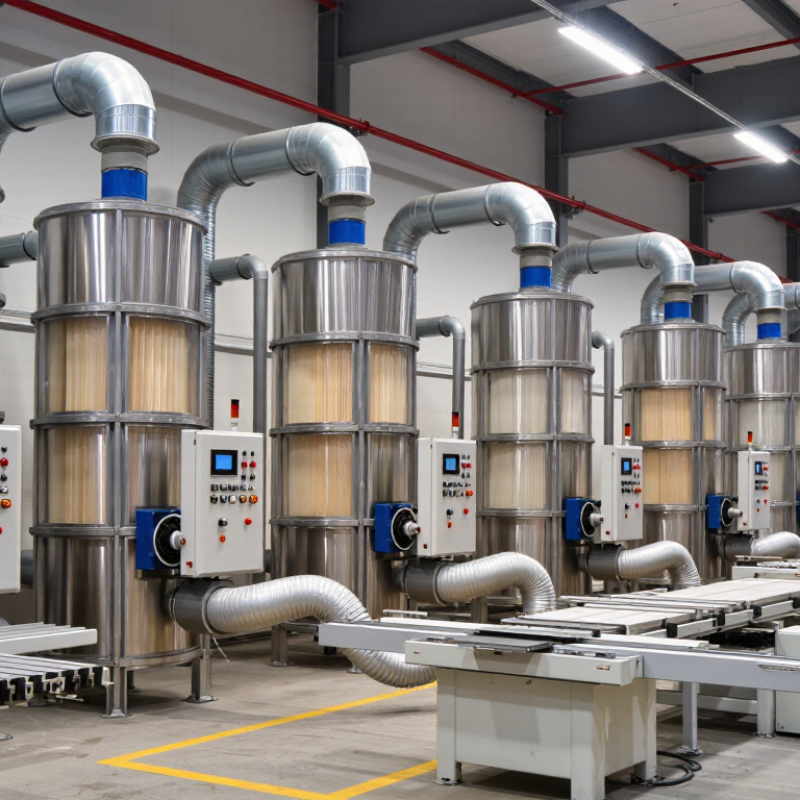
Automated dust collectors use sensors, controls, and cleaning cycles to maintain airflow with less manual intervention. Cartridge collectors suit fine, dry particles in compact production areas. Their pleated filters offer substantial surface area, but high humidity can cause blinding.
Baghouse collectors handle heavier dust loads and high air volumes. Pulse-jet cleaning removes buildup while the system operates. Cyclone pre-separators capture larger particles before filtration, reducing filter wear.
Wet scrubbers are useful when dust can mix safely with water, although they create slurry and require careful drainage management. Electrostatic precipitators can treat fine particles, but their performance depends strongly on particle properties.
Tips: Check dust size, moisture, temperature, and collection volume before selecting equipment. Measure differential pressure continuously. A rising reading may indicate clogged filters or a failing cleaning cycle. Inspect rotary valves and compressed-air lines regularly. Small leaks matter. Never assume a larger collector is automatically better; excessive capacity can increase energy use and complicate control.
In practical facilities, hybrid systems often perform better than one collector type alone. A cyclone may protect a cartridge unit, while automated dampers balance airflow across branches. Programmable controls can trigger alarms before production quality declines. However, automation does not replace inspection. Sensors can drift, and filter seals can fail quietly. Combustible dust also requires a documented hazard assessment and engineered protection. The uncomfortable lesson is simple: the best design on paper may underperform when operators ignore maintenance, access is restricted, or dust behavior changes during seasonal production.
Industrial dust control now depends on automation, not oversized ducts alone. The ten leading systems include reverse-pulse baghouses, cartridge collectors, cyclones, wet scrubbers, downdraft tables, ambient cleaners, mobile extractors, spark-resistant units, HEPA final filters, and filter receivers.
A reverse-pulse baghouse suits heavy dust and continuous production. A cartridge collector offers compact filtration and quick filter changes. Cyclones remove larger particles before finer filtration, reducing loading.
Wet scrubbers handle hot or sticky dust, but wastewater management adds complexity. Downdraft tables capture particles near operators. Ambient cleaners improve room circulation, yet they should not replace source capture.
Capture distance matters. Very much.
NIOSH ventilation guidance emphasizes capturing contaminants at their release point. The U.S. OSHA silica standard limits respirable crystalline silica exposure to 50 micrograms per cubic meter over eight hours. That figure makes airflow verification essential. A system can sound powerful while missing dust around a cutting blade.
The U.S. EPA AP-42 compilation shows that dust emissions vary greatly by material, process, and control efficiency. Therefore, comparing only motor horsepower is unreliable.
Look at measured airflow, filter area, pressure-drop alarms, automatic cleaning frequency, and verified capture velocity. HEPA stages can protect downstream air, but they increase resistance and energy demand. Spark detection and isolation may be necessary for combustible dust applications. NFPA combustible-dust guidance supports hazard-based design, although real facilities often discover gaps during maintenance.
I have seen clean floors hide poor hood placement. That is the uncomfortable part. A smaller, well-positioned collector may outperform a larger system installed without process measurements.
Selecting an automated dust collection system starts with the dust, not the catalog. Measure particle size, moisture, temperature, and whether the material clogs or abrades filters. Record airflow at each pickup point during real production. The required volume may exceed a laboratory estimate. Choose a unit with adequate filter area, fan capacity, and a controllable cleaning cycle. Differential-pressure monitoring helps confirm when filters load. Do not ignore noise, heat, access space, or waste-disposal capacity. A compact machine can still create a difficult maintenance problem.
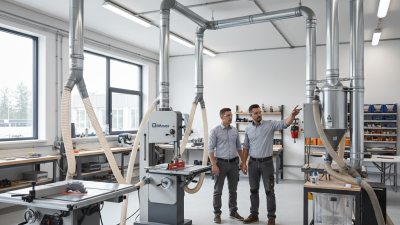
Installation should keep duct runs short, smooth, and accessible. Use gradual bends where possible, and seal every joint carefully. Poorly sealed connections reduce capture performance and pull dust into the room. Place inspection doors near bends, hoppers, and high-risk accumulation points. Ground conductive components when static buildup is possible. Combustible dust requires a documented hazard assessment and suitable protective measures. Coordinate the collector with machine controls, emergency stops, and verified airflow switches. Test each branch under operating conditions, not only with empty machinery. Small errors become expensive.
Maintenance needs a written routine that operators can actually follow. Check pressure readings, pulse-cleaning response, fan vibration, seals, and hopper discharge. Inspect filters for tears, blinding, and uneven loading. Remove settled dust safely, and prevent compressed-air cleaning from dispersing it. Replace parts according to measured condition, not habit alone. Keep records current. Record dates, readings, corrective actions, and photographs. Review trends monthly; rising pressure often appears before visible performance loss. In practice, schedules are sometimes too optimistic. A missed inspection can expose weak design assumptions. Revise the plan after every process change, filter failure, or unusual dust release.