Leave Your Message

China Best Automatic Dust Collector Manufacturer?

Choosing the best Automatic Dust Collector manufacturer in China requires more than comparing catalog prices. It requires evidence.

A reliable supplier should demonstrate practical experience with woodworking, metalworking, pharmaceutical, food-processing, or other demanding environments. Airflow, filtration efficiency, pressure loss, noise levels, filter life, and maintenance access all affect real performance. A polished product page is not enough.

Bill Pentz, a widely recognized dust-collection educator, has emphasized, “The best dust collection system is the one you use.” That idea remains important when evaluating an Automatic Dust Collector. A technically powerful unit may still fail if operators avoid its controls, cleaning cycle, or replacement filters. Simple operation matters.

Look for manufacturers that provide test data, component specifications, factory inspection records, and responsive technical support. Ask whether the quoted airflow applies before or after filtration. That detail can change the decision.

China has many capable dust-collection manufacturers, but quality varies between factories and product lines. Some suppliers excel at custom engineering. Others focus on standardized machines and faster delivery. Neither approach is automatically superior.

The strongest candidates explain their design choices clearly. They should also discuss grounding, fire prevention, filter monitoring, and installation conditions. These details reveal professional competence.

There is room for skepticism. “Automatic” does not always mean maintenance-free. Sensors can drift, filters can clog, and site conditions can reduce performance. This guide examines leading Chinese manufacturers through experience, technical evidence, service capability, and long-term reliability, helping buyers make a careful and defensible choice.
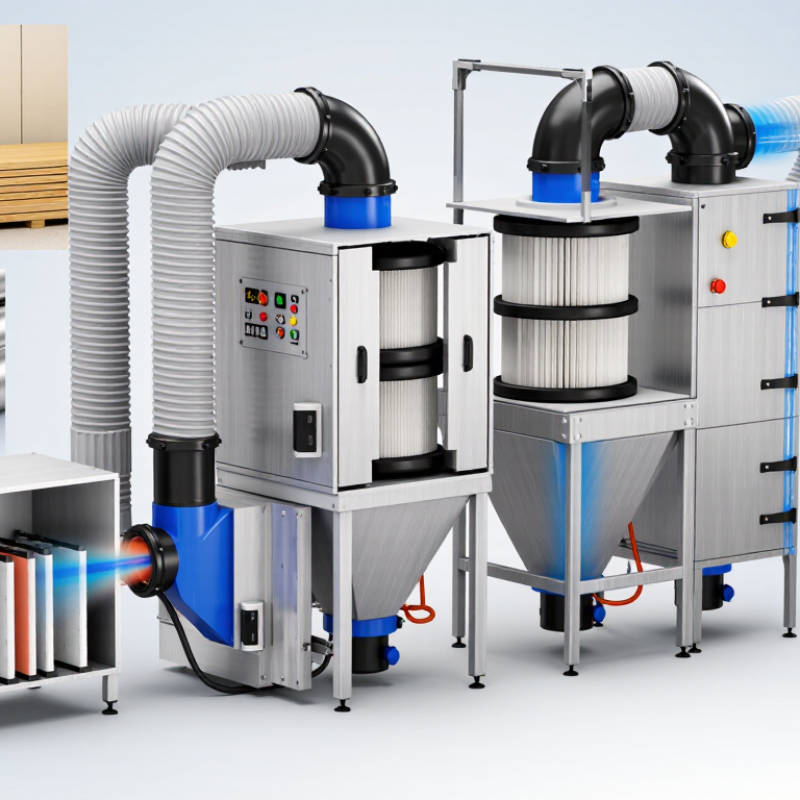
China Best Automatic Dust Collector Manufacturer?

What Is an Automatic Dust Collector?

An automatic dust collector is a filtration system that removes airborne particles with limited manual control. It draws dusty air through ductwork, separates particles, and releases cleaner air. A fan creates the airflow. Filter cartridges or bags capture dust on their surfaces.

The automatic feature usually comes from pulse-jet cleaning. A pressure sensor measures the difference between dirty and clean air. When pressure rises, a controller opens a valve and sends a short compressed-air pulse. The pulse shakes dust from the filter into a collection hopper.

This process can continue while production runs. It reduces shutdown time, but it does not eliminate maintenance.

OSHA’s 2016 silica rule sets an action level of 25 micrograms per cubic meter and a permissible exposure limit of 50 micrograms over eight hours. WHO’s 2021 air-quality guidelines recommend only 5 micrograms of annual PM2.5 exposure outdoors. These figures show why airflow design matters.

A collector needs correct capture velocity, sealed duct joints, and suitable filter media. Differential-pressure readings also need regular verification. A filter can appear clean yet perform poorly. That part is easy to overlook. In real workshops, dust buildup, damp material, and incorrect pulse timing often reduce efficiency. A reliable system should record pressure, airflow, cleaning cycles, and hopper levels, while operators inspect filters and seals instead of trusting automation blindly.
How Does an Automatic Dust Collector Work?

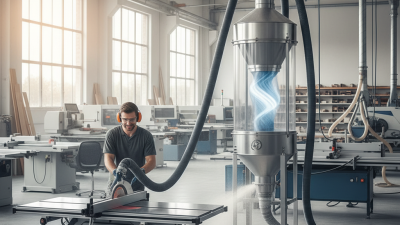
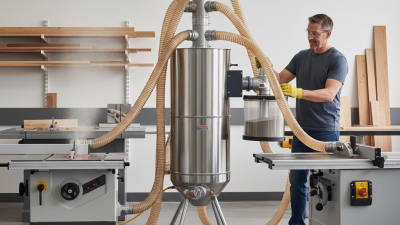
An automatic dust collector begins with measurement, not guesswork. A pressure sensor monitors the difference between dirty and clean air sides of the filter. When resistance rises, the controller starts a cleaning cycle. This keeps airflow more stable during production.

Dust-laden air enters through an inlet and slows inside the chamber. Heavier particles fall into the collection bin. Fine dust reaches the filter media, where fibers capture it. A pulse of compressed air then travels through the filter in reverse. The brief shock loosens the dust cake. Gravity moves it downward. The fan maintains negative pressure, helping prevent escape through doors and joints. It is a simple sequence, but poor duct design can weaken the result.

In field inspections, sensor settings often need adjustment. A clean filter does not always mean clean air. Leakage, moisture, or an overfilled bin can reduce performance. Operators should check pressure readings, seals, discharge valves, and airflow at the pickup point. Record these values regularly. Patterns reveal trouble earlier than noise does. The first setting is rarely perfect. I would not pretend otherwise. A dependable manufacturer should verify airflow, filtration efficiency, electrical protection, and maintenance access before delivery. Clear test records matter, especially when dust characteristics change between materials and seasons.

How Does an Automatic Dust Collector Work?

An automatic dust collector draws contaminated air through a filter, where dust particles are trapped while cleaned air passes through. As dust builds up, the pressure difference across the filter increases. A pulse-jet cleaning cycle then releases short bursts of compressed air to remove accumulated dust and restore airflow. The 0.3-micrometre value shown represents the tested reference particle size used for HEPA filter efficiency ratings; actual performance depends on the filter design, airflow, dust type, and operating conditions.

Key Types of Automatic Dust Collectors Made in China

Chinese manufacturers produce several automatic dust collector types for different workshop conditions. The right choice depends on dust volume, particle size, moisture, and required air cleanliness. An experienced supplier should explain airflow calculations, filter loading, cleaning cycles, and maintenance access. Generic capacity claims are not enough.

Pulse-jet baghouse collectors suit metalworking, woodworking, cement, and bulk material handling. Compressed-air pulses clean filter bags while production continues. Cartridge collectors use pleated filters and provide a compact footprint for smaller factories and finishing areas. They can capture fine particles efficiently, but coating dust may block media quickly. That detail is often missed. Cyclone pre-collectors remove heavier particles before they reach a bag or cartridge stage. This reduces filter wear and lowers cleaning frequency.

Wet dust collectors handle sticky dust when water-compatible processes are available. Central systems can connect sensors, rotary valves, differential-pressure controls, and dust bins. During factory evaluations, buyers should request material specifications, airflow test records, and filter-life estimates. Installation quality matters as much as the collector itself. Even a well-built unit may underperform when ducts are undersized or poorly sealed. Some recommendations remain uncertain without an on-site survey. Ask for test data from dust similar to yours, not only general laboratory results.

China Best Automatic Dust Collector Manufacturer? - Key Types of Automatic Dust Collectors Made in China

Automatic Dust Collector Type Operating Principle Typical Airflow Range Typical Filtration Performance Best-Suited Dust or Application Automatic Cleaning Method Key Selection Considerations
Automatic Pulse-Jet Baghouse Dust-laden air passes through fabric filter bags or cartridges. A short pulse of compressed air removes accumulated dust from the filter surface. Approximately 2,000–100,000 m³/h, depending on the number and size of filter elements. Commonly 99% or higher for properly selected industrial dust, with final performance depending on filter media, particle size, and system design. Cement, woodworking, mineral processing, metalworking, chemical powder, and general process dust. Timed or differential-pressure-controlled compressed-air pulses. Dust characteristics, air temperature, moisture, filter-media compatibility, compressed-air quality, and explosion-risk requirements.
Automatic Cartridge Dust Collector Pleated cartridge filters provide a large filtration area in a compact housing. Dust is periodically removed by reverse-pulse air. Approximately 1,000–30,000 m³/h for many compact and medium-duty systems. Often 99% or higher for fine particulate when the cartridge media and air-to-cloth ratio are correctly selected. Welding fumes, laser and plasma cutting, powder coating, pharmaceutical powders, and fine dry dust. Automatic pulse-jet cleaning controlled by a timer or differential-pressure sensor. Fine-particle loading, humidity, sticky dust, required airflow, filter replacement access, and available installation space.
Automatic Cyclone Dust Collector Centrifugal force separates coarse and heavy particles from the airstream before the air reaches a downstream filter or exhaust point. Approximately 1,000–50,000 m³/h per unit, subject to cyclone diameter and design velocity. Generally effective for larger particles; fine-dust efficiency is lower than that of fabric or cartridge filtration without secondary filtration. Wood chips, coarse mineral dust, grain particles, abrasive dust, and pre-separation before a fine filter. Automatic rotary valve, screw conveyor, or sealed discharge system for collected material. Particle size distribution, pressure drop, abrasion resistance, discharge sealing, and the need for a secondary filter.
Automatic Wet Scrubber Liquid droplets or a liquid film captures dust and, in some designs, soluble gases from the process airstream. Approximately 1,000–100,000 m³/h, depending on the scrubber configuration and gas conditions. Can achieve high removal of suitable particles; performance varies significantly with droplet size, liquid-to-gas ratio, and particle properties. Hot, humid, combustible, or sticky dust; chemical fumes; and processes where gas cooling or washing is required. Automatic liquid circulation, spray control, sludge removal, and level monitoring. Water or chemical compatibility, wastewater treatment, corrosion protection, pump maintenance, and visible plume control.
Automatic Electrostatic Precipitator Particles are electrically charged and collected on oppositely charged plates or tubes. The collection surfaces are periodically cleaned. Approximately 5,000–200,000 m³/h for large process-gas applications. High efficiency is possible for suitable particle sizes and resistivity, but actual results depend strongly on operating conditions. Large-volume combustion exhaust, oil mist, certain process fumes, and fine particulate with stable electrical properties. Automatic rapping, vibration, or water-washing systems, depending on the design. Particle resistivity, electrical safety, spark protection, gas composition, maintenance access, and local emission regulations.
Automatic Centralized Vacuum Dust Collector A central blower creates negative pressure and collects dust from multiple workstations through a connected duct network. Approximately 2,000–30,000 m³/h, based on the number of simultaneous pickup points. Usually determined by the installed cartridge, bag, or high-efficiency secondary filter stage. Factories with multiple machines, woodworking lines, grinding stations, cutting areas, and general housekeeping vacuum systems. Automatic filter cleaning and dust discharge; optional zone dampers can control demand. Duct balancing, simultaneous-use demand, fan selection, noise control, static pressure, and combustible-dust protection.
Automatic Oil Mist Collector Mechanical filters, coalescing stages, or electrostatic sections capture airborne coolant and lubricant droplets. Approximately 500–15,000 m³/h per unit, depending on the machine tools and enclosure arrangement. Performance varies by droplet size and filter configuration; multi-stage systems are used for higher removal requirements. CNC machining, turning, milling, grinding, metal cutting, and coolant-laden indoor air. Automatic or scheduled filter cleaning, oil drainage, and collection-tank monitoring. Coolant type, droplet size, fire risk, return-to-machine requirements, filter drainage, and indoor air-quality targets.

Note: Airflow and filtration figures are typical engineering ranges rather than guaranteed values. Final performance should be confirmed through a process assessment, dust analysis, system pressure calculation, and applicable local emission and safety standards.

How to Evaluate a Chinese Dust Collector Manufacturer

China Best Automatic Dust Collector Manufacturer?

How to Evaluate a Chinese Dust Collector Manufacturer

Choosing a Chinese dust collector manufacturer requires more than comparing prices. A 2024 MarketsandMarkets report estimates the global dust collector market will grow steadily through 2029. That growth increases competition, but not every supplier has equal engineering depth. Request airflow curves, pressure-drop data, filter-media specifications, and motor efficiency records. These documents should match the proposed model, not a generic catalog.

Visit the factory, physically or through a verified video audit. Inspect welding quality, sealing points, pulse-jet valves, and filter replacement access. Ask for test records under your actual dust load, temperature, and humidity. ISO 16890 classifies air filters by particulate efficiency, while ISO 12100 supports machinery risk assessment. A serious manufacturer should explain both standards clearly. They should also discuss combustible-dust controls where relevant. Cheap equipment can become expensive when filters clog early. I have seen specifications look excellent on paper, yet installation details were poorly considered. That possibility deserves attention.

Tips: Compare at least three technical quotations. Confirm test methods and instrument calibration dates. Ask for a reference installation with similar dust. Check spare-parts availability, response times, and commissioning support. The U.S. EPA’s AP-42 guidance shows why emission estimates depend on process conditions, not equipment labels alone. Treat unverified efficiency claims carefully. A useful supplier welcomes difficult questions.

Why Choose a Chinese Automatic Dust Collector Supplier?

China Best Automatic Dust Collector Manufacturer?

Why Choose a Chinese Automatic Dust Collector Supplier?

Chinese automatic dust collector suppliers combine manufacturing scale with practical engineering experience. China’s industrial equipment sector supports fast sourcing for pulse-jet filters, explosion-relief components, fans, sensors, and control cabinets. This integrated supply chain can shorten procurement time and reduce replacement delays.

Independent data also supports careful dust-control planning. The U.S. Occupational Safety and Health Administration limits respirable crystalline silica exposure to 50 micrograms per cubic meter over an eight-hour shift. MarketsandMarkets reported continued growth in the global dust control systems market, driven by stricter workplace standards and expanding manufacturing activity. A qualified Chinese supplier should connect airflow calculations with these operational requirements, not simply offer a larger filter.

Details matter.

Ask for airflow testing, pressure-drop records, filter-media specifications, and automatic cleaning-cycle data. Request factory inspection evidence and a clear spare-parts schedule. Suppliers with ISO 9001-based quality systems may provide more consistent documentation, but certification alone proves little. Site experience still matters. I have seen projects lose efficiency because duct layouts were copied without measuring actual suction points. That mistake is easy to repeat.

Tips: Compare total operating cost, not only the purchase price. Check fan efficiency, compressed-air use, filter replacement intervals, noise levels, and controller access. Require a performance test using dust similar to your process. If the supplier avoids measured data, reconsider the order.