Why Choosing the Right Mixing Equipment is Essential for Your Business?
Choosing the right mixing equipment is crucial for any business involved in production. The effectiveness of these machines can significantly impact product quality and workflow efficiency. Whether in food processing, pharmaceuticals, or chemical manufacturing, the right equipment can optimize processes.
Investing in high-quality mixing equipment can reduce waste and enhance consistency. Moreover, inappropriate choices may lead to operational delays and increased costs. Businesses often overlook the importance of proper mixing methods and equipment specifications. This can result in challenges that affect the final product.
Moreover, businesses must assess their specific needs. Each industry has unique demands that influence mixing requirements. Finding suitable equipment that meets these needs can be challenging. However, the right investment can yield significant returns. Ultimately, the decision of selecting mixing equipment is not just about functionality. It also reflects a commitment to quality and efficiency in production.
Importance of Mixing Equipment in Various Industries
Mixing equipment plays a critical role across various industries, including pharmaceuticals, food processing, and chemicals. The right mixers enhance efficiency and product consistency. A study by the International Society for Pharmaceutical Engineering indicates that improper mixing can lead to a 20% increase in production costs due to wasted materials and time. In food production, the FDA emphasizes the importance of uniform mixing to ensure safety and quality.
In the chemical industry, accurate mixing is vital for reactions. According to a report by the American Chemical Society, 50% of product failures in chemical processes stem from inadequate mixing. This highlights the need for reliable and effective equipment. Ensuring the right equipment can minimize the risk of errors that lead to subpar products.
Many businesses overlook the impact of mixing processes. In some cases, outdated equipment can cause inconsistencies that harm reputations. Investing in advanced mixing technology is essential for optimizing production and maintaining quality standards. Continuous evaluation of mixing practices is necessary to stay competitive. The equipment used directly influences the bottom line, making careful selection a business imperative.
Factors to Consider When Selecting Mixing Equipment
When selecting mixing equipment, consider capacity. Industry data shows that over 40% of businesses face inefficiencies due to improperly sized mixers. Too small? Your production suffers. Too large? You waste energy and resources. Assessing your daily production needs is crucial.
Next, think about the material compatibility. Mixing different substances can lead to chemical reactions. Reports highlight that 30% of accidents in manufacturing stem from improper material choices. Ensure your mixers can handle the specific materials in your process. Researching the physical and chemical properties of your components will help.
Another factor is maintenance and support. A study indicates that 25% of unplanned downtime is due to equipment failure. Choosing mixers with good support options can minimize disruptions. Remember, equipment will require upkeep. Look for machines designed for easy maintenance. Consider the total cost of ownership over time. This approach can save significant costs in the long run. These details matter.
Why Choosing the Right Mixing Equipment is Essential for Your Business?
| Feature |
Importance |
Considerations |
| Mixing Speed |
Determines consistency and quality of the mixture |
Adjustable speeds can enhance versatility for different materials |
| Capacity |
Affects the volume of production |
Choose based on expected production needs |
| Material Compatibility |
Ensures mixing effectiveness and prevents contamination |
Should match the chemicals or materials used |
| Ease of Cleaning |
Impacts maintenance time and hygiene standards |
Look for designs that are easy to disassemble |
| Energy Efficiency |
Affects operational costs and environmental impact |
Prioritize energy-saving features |
| Control Systems |
Influences precision and monitoring capabilities |
Advanced controls allow for better automation |
Types of Mixing Equipment and Their Applications
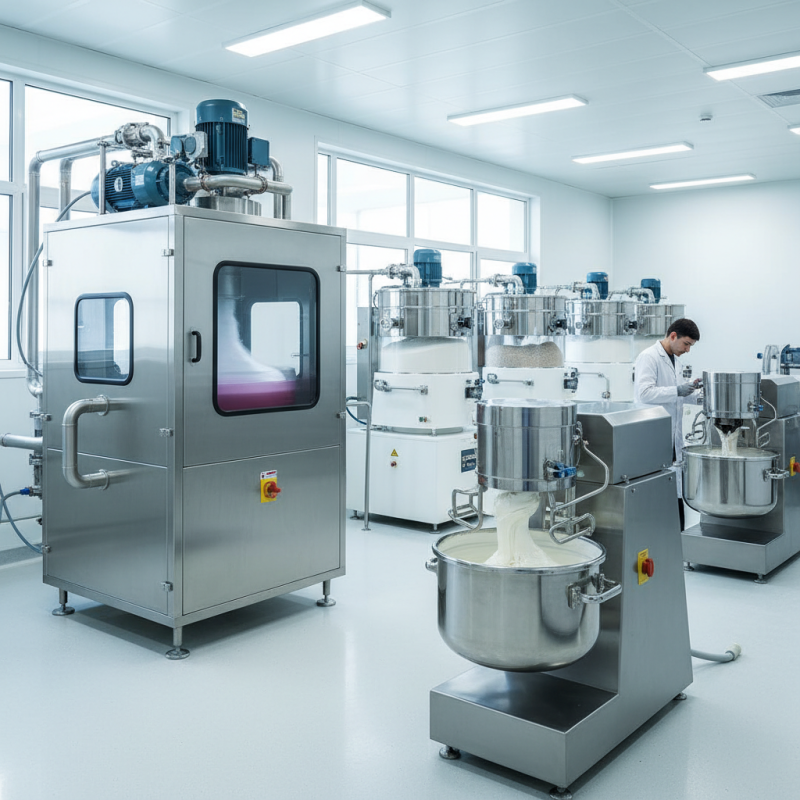
Selecting the correct mixing equipment is vital for diverse industries. Various types of mixing equipment cater to specific needs. For example, paddle mixers are ideal for dry materials, ensuring uniformity in powder blending. Their design allows for efficient handling of granular substances.
On the other hand, high-shear mixers excel at creating emulsions and suspensions. They operate at high speeds, which helps break down particles. These mixers are essential in sectors like food and pharmaceuticals, where consistency is crucial. Their effectiveness can significantly enhance product quality.
In contrast, some equipment may not meet all requirements. Selecting mixers without proper assessment can lead to inefficiencies. Some businesses may struggle with slow mixing times or uneven blends. This can affect overall production quality. Therefore, understanding the various types of mixers can improve operational efficiency and reduce waste.
Impact of Poor Mixing on Product Quality and Efficiency
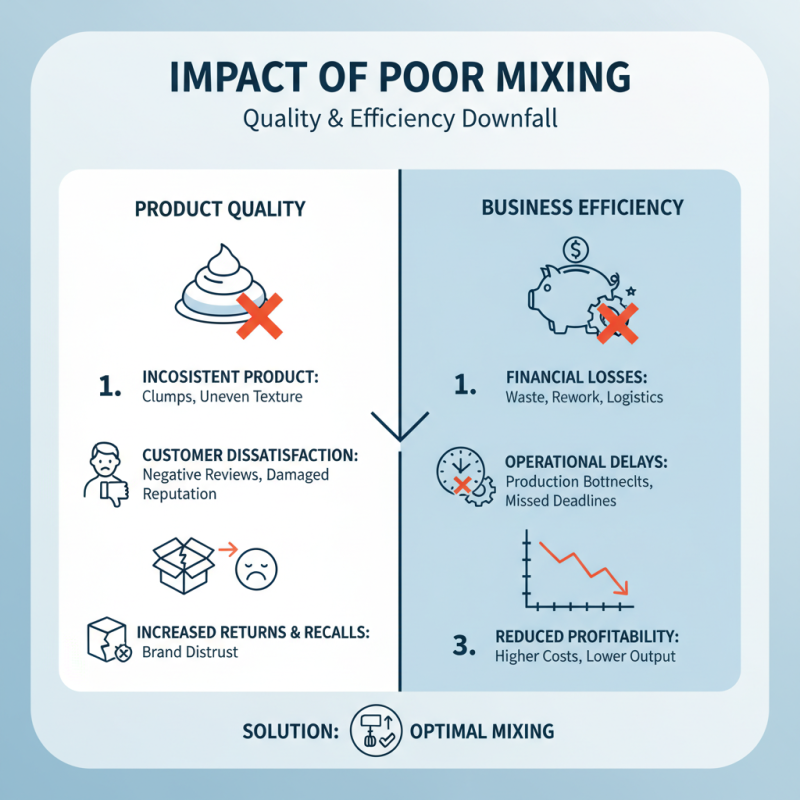
Mixing is a critical step in production. Poor mixing can lead to inconsistency in product quality. Inadequate blending may result in unwanted clumps or uneven textures. These issues can affect customer satisfaction and brand reputation. When products do not meet quality standards, businesses may face costly returns and recalls. This impacts both profit margins and long-term viability.
The efficiency of mixing equipment also plays a significant role. Inefficient machines can slow down production rates. This delay means higher operational costs and missed deadlines. If a company uses outdated equipment, quality often suffers. Operators may struggle to achieve uniform mixtures. These challenges can push staff to their limits, causing fatigue and decreased morale.
Choosing the right mixing equipment requires careful consideration. The decision can reflect commitment to quality. Businesses must assess their unique needs and production goals. Balancing cost, efficiency, and product quality is crucial. Investing in suitable mixing technology can yield significant long-term benefits. However, it’s essential to continually evaluate processes to ensure standards are met. Mistakes happen, but they can be learning opportunities for improvement.
Cost-Benefit Analysis of Investing in the Right Mixing Equipment
Investing in the right mixing equipment can significantly impact your bottom line. The initial costs may seem daunting, but the long-term savings often outweigh them. Quality equipment improves mixing efficiency and reduces waste. This efficiency means you spend less time on production, ultimately boosting profits.
On the other hand, opting for cheaper alternatives might appear cost-effective. However, these options can lead to inconsistent product quality. This inconsistency may result in customer dissatisfaction. In turn, it can damage your business reputation. It’s essential to evaluate the risks versus rewards of low-cost equipment against the potential financial loss of poor production.
Consider maintenance costs as well. High-quality equipment often requires less servicing, which translates into additional savings. If machinery breaks down, this can halt production. Such interruptions can be costly, impacting deadlines and customer relationships. Investing wisely not only increases reliability but also supports sustainable growth.