2026 How to Choose the Best Crushing Equipment for Your Needs?
Choosing the right crushing equipment is vital for efficiency and productivity in various industries, including mining and construction. According to a report by Research and Markets, the global crushing equipment market is expected to reach USD 4.9 billion by 2026, growing at a CAGR of 6.5%. This indicates an increasing demand for reliable and effective technologies in material processing.
When selecting crushing equipment, one must consider factors like material type, desired output size, and operational efficiency. For instance, the choice between jaw crushers and impact crushers can significantly affect a project's overall productivity. A study by Grand View Research highlights that the efficiency of crushers can vary widely based on their design and operational context.
It's crucial to consult with industry experts to assess your specific needs. Many companies overlook the importance of maintenance and adaptability in their choice of crushing equipment. This oversight can lead to reduced performance and increased costs. Reflecting on past experiences can guide better decision-making, ensuring that the equipment chosen aligns with both present and future operational requirements.
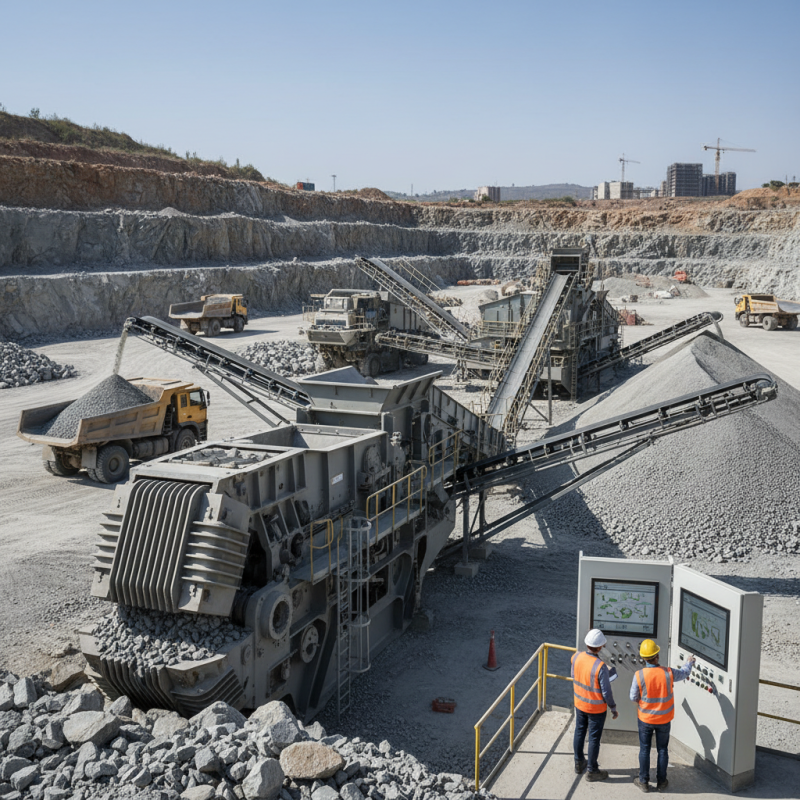
Understanding Different Types of Crushing Equipment Available
When selecting crushing equipment, it's essential to understand the various types available in the market. Typically, crushing equipment can be categorized into three main types: jaw crushers, cone crushers, and impact crushers. According to industry reports, the global crushing equipment market was valued at approximately $4.2 billion in 2021 and is expected to grow steadily.
Jaw crushers are known for their strength and versatility, making them a popular choice for primary crushing. They can handle large materials and have a high reduction ratio. Cone crushers, on the other hand, are ideal for secondary and tertiary applications, producing finer materials. The impact crushers offer high-speed reduction, suitable for softer materials. However, they may require more maintenance compared to other types.
Tip: Always evaluate the material you will be processing. The hardness and moisture content can dramatically impact the performance of the equipment. Choosing the right type can improve operational efficiency and reduce downtime.
Reflecting on industry trends, consider the footprint of your chosen machine. Compact options might save space, but they could compromise performance. Reporting data suggest that businesses should not overlook total cost of ownership. Investing in durable, efficient equipment pays off over time.
Evaluating Your Material Requirements for Crushing Processes
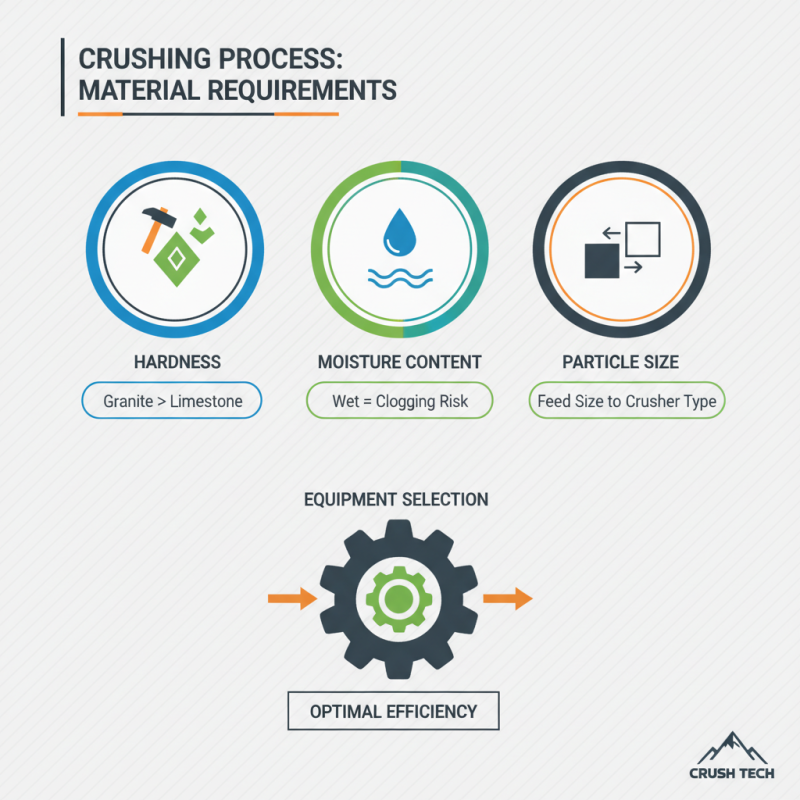
Choosing the right crushing equipment involves understanding your material's specific characteristics. Material hardness, moisture content, and size are vital factors. For instance, according to industry reports, hard materials like granite demand more robust crushing solutions compared to softer materials like limestone. This understanding shapes the efficiency of your operations.
Moisture content can dramatically impact the crushing process. High moisture levels may lead to clumping, affecting output rates. A study by the American Society of Mechanical Engineers highlights that materials with over 10% moisture can reduce efficiency by as much as 30%. A thorough analysis of particle size distribution is equally crucial. Equipment must be selected based on how the material breaks down. For example, a jaw crusher might be suitable for larger pieces, while a cone crusher excels at creating fine aggregates.
Environmental considerations should not be overlooked. Energy consumption and noise levels are critical for compliance with regulations. For example, the Environmental Protection Agency emphasizes sustainable practices in industrial operations. Reflecting on these aspects can help in choosing equipment that aligns with operational goals and regulatory frameworks. Thus, evaluating your material requirements lays the groundwork for successful crushing processes.
Assessing the Scale and Capacity Needs for Your Operations
Choosing the right crushing equipment begins with understanding the scale and capacity needed for your operations. The mining and materials processing industry has specific requirements that vary greatly based on project size. For small to medium operations, equipment with a capacity of
50 to 100 tons per hour
can be sufficient. Larger operations often demand equipment capable of handling
over 500 tons per hour. This capacity difference can greatly affect operational efficiency.
Different projects require various types of crushing. For instance, a quarry may need primary crushers with high throughput, while a recycling operation may focus on mobile crushers for versatility. According to industry data,
40% of operations
report challenges related to selecting equipment due to insufficient scaling analysis.
Understanding the material type and desired end product is crucial for making informed decisions.
Assessing site conditions also plays a crucial role. Some locations may have
restricted space
or the need for dust control. In such cases, smaller, portable units or stationary equipment with containment features are essential. Relying on outdated information can lead to costly miscalculations. Each project is unique and warrants a careful review of these factors.
Key Features to Consider When Selecting Crushing Equipment
When selecting crushing equipment, understanding key features is crucial. Begin with capacity and size. According to industry reports, optimal capacity can dramatically affect efficiency. Equipment should handle the required throughput while maintaining a suitable size for your operation. For instance, a jaw crusher may be efficient for smaller projects, but a gyratory crusher could be necessary for larger scale operations.
Power consumption is another vital feature. Energy costs account for a significant portion of operational expenses. Choosing a machine with lower energy requirements can lead to substantial long-term savings. Studies indicate that optimized equipment can reduce energy consumption by up to 30%. This is not just about the initial cost; it's about overall lifecycle efficiency.
Maintenance requirements also deserve attention. Consider the accessibility of parts and ease of service. Failing to account for ongoing maintenance can lead to unexpected downtime. It's essential to reflect on your team's capabilities and how they align with the equipment's complexity. Some machines may promise high performance but could be burdensome to maintain. Balancing performance and practicality is the key to sustainable operations.
2026 Crushing Equipment Comparison
Budget Considerations and Cost-Effectiveness of Crushing Solutions
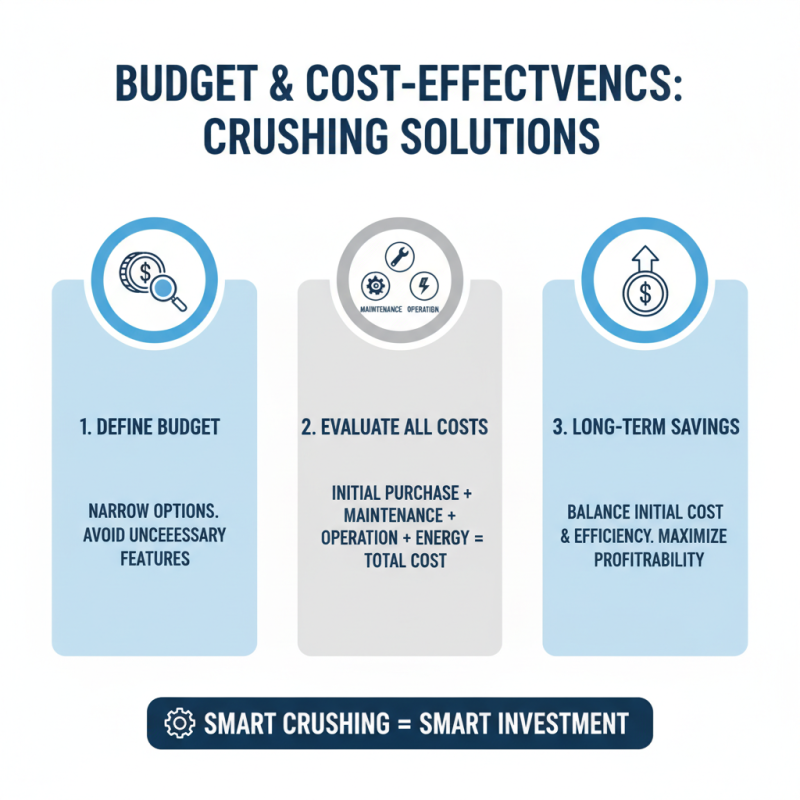
When considering crushing equipment, budget plays a pivotal role. A well-defined budget helps narrow down options. This prevents overspending on features that may not be necessary for specific applications. It is vital to evaluate all associated costs, including maintenance, operation, and energy consumption. Selecting equipment that balances initial cost with long-term efficiency can lead to significant savings.
For many, the cheapest option seems appealing. However, low upfront costs can result in more frequent repairs and downtime. Reflecting on experiences, some might find that investing slightly more initially yields better overall performance. A focus on cost-effectiveness requires a thorough understanding of operational needs. Think about how often and where the equipment will be used. Choices should align with practical demands rather than just early-stage budgets.
News of technological advancements in crushing solutions is exciting. Newer models may have higher upfront costs, but they often provide improved efficiency. Researching these innovations can inform better decision-making. It’s not just about buying equipment; it’s about making a strategic investment. Balancing budget and performance is complex. A cautious approach will serve you well in this decision-making process.