Leave Your Message
Global buyers are reassessing Mixing Equipment as factories demand higher consistency, lower energy use, and easier maintenance. Grand View Research estimates the global industrial mixers market at approximately USD 7 billion in 2023, with continued growth through 2030. MarketsandMarkets reports different values because its scope includes other industrial technologies. That difference matters. Market figures are not perfectly comparable.
Edward L. Paul, a recognized authority and co-author of Handbook of Industrial Mixing, describes the purpose clearly: “Mixing is the process of reducing or eliminating inhomogeneities in a mixture by inducing flow.” His point remains practical. A powder blender, ribbon mixer, high-shear mixer, or static mixer must solve a specific process problem. It should not be selected by appearance or catalogue price alone.
This guide examines the Top 10 Types of Mixing Equipment for Global Buyers, covering working principles, suitable materials, capacity, shear level, cleaning requirements, and operating risks. A stainless-steel pharmaceutical vessel may need polished surfaces and validated cleaning. A cement plant may prioritize abrasion resistance and torque. A food processor may focus on hygienic drainage and gentle handling.
Real-world experience often exposes gaps in simple rankings. The “best” machine depends on viscosity, batch size, residence time, temperature, and the required uniformity. Energy consumption also deserves closer attention, although published comparisons are sometimes incomplete. Buyers should request test data, impeller details, warranty terms, spare-parts availability, and local service support before choosing. Small details can determine long-term value.
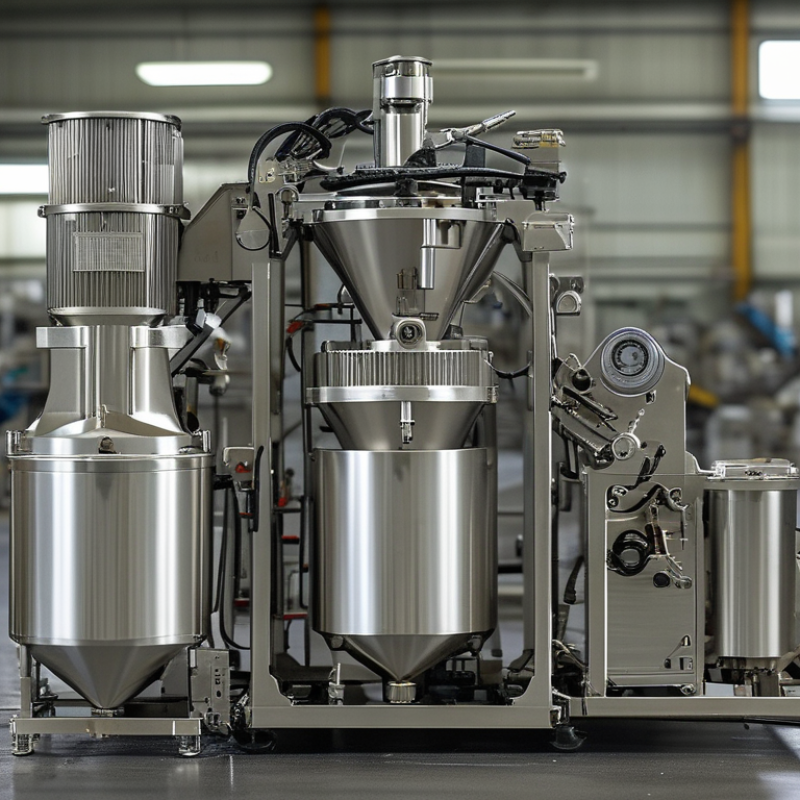
Mixing equipment is industrial machinery designed to combine two or more materials into a consistent blend. It may handle powders, liquids, pastes, granules, or temperature-sensitive ingredients. In processing plants, mixing supports uniform composition, controlled heat transfer, and repeatable product quality. A well-designed mixer can reduce settling, lumps, air pockets, and uneven moisture. Its role extends beyond simple agitation.
Common equipment types include ribbon, paddle, turbine, propeller, anchor, planetary, high-shear, static, drum, and vacuum mixers. Each creates a different flow pattern and level of shear. Ribbon mixers suit many dry powders, while planetary mixers manage thick materials with strong resistance. High-shear units disperse fine particles quickly. Static mixers use fixed internal elements and require continuous flow. The correct choice depends on viscosity, batch size, mixing time, cleaning needs, and material sensitivity.
Global buyers should examine working volume, motor load, shaft speed, sealing, and maintenance access. At a food plant, operators may inspect the vessel after every batch because small residue can affect the next product. In a chemical process, temperature probes and controlled feeding often matter more than maximum speed. Practical trials remain valuable. Laboratory results can look excellent, yet production scale may reveal dead zones or unexpected heating. Our first setting is rarely perfect. Material behavior changes with humidity, particle size, and wear. That is why experienced engineers compare test data with actual operating conditions before approving a final configuration.
| No. | Mixing Equipment Type | Primary Mixing Principle | Typical Material Viscosity | Typical Operating Mode | Common Applications | Main Advantages | Key Considerations |
|---|---|---|---|---|---|---|---|
| 1 | Propeller Mixer | Axial flow generated by a high-speed propeller | Low viscosity, generally below 2,000 mPa·s | Batch or continuous | Liquid blending, dilution, heat transfer, and suspension of light solids | Efficient circulation, relatively low power demand, and simple installation | Less suitable for highly viscous products or heavy solids that settle quickly |
| 2 | Turbine Mixer | Radial or mixed-flow agitation using flat-blade or pitched-blade turbines | Low to medium viscosity, commonly below 10,000 mPa·s | Batch processing, with some continuous applications | Gas dispersion, liquid-liquid blending, solid suspension, and reaction vessels | Strong mixing intensity and flexible impeller configurations | May require baffles to prevent vortexing; power consumption rises with viscosity |
| 3 | Paddle Mixer | Broad, low-speed paddles move materials mainly in horizontal or radial directions | Low to medium viscosity, typically below 50,000 mPa·s | Batch or continuous | Powders, granules, pastes, slurries, and gentle liquid blending | Gentle handling, low shear, and good suitability for fragile particles | May not provide sufficient dispersion for difficult agglomerates or gas-liquid systems |
| 4 | Anchor Mixer | Low-speed sweeping action close to the vessel wall | Medium to very high viscosity, approximately 10,000–1,000,000 mPa·s | Batch processing | Creams, adhesives, coatings, resins, cosmetics, and heat-sensitive pastes | Excellent wall sweeping and heat-transfer performance in jacketed vessels | Slow mixing cycle and limited capability for intense dispersion without auxiliary equipment |
| 5 | Helical Ribbon Mixer | Counter-directional movement created by helical ribbons in a horizontal or vertical vessel | Medium to very high viscosity, often up to about 1,000,000 mPa·s | Primarily batch processing | Dry powders, powders with liquids, dough-like products, sealants, and compounds | Effective bulk movement and strong blending of cohesive or viscous materials | Requires adequate torque; cleaning can be demanding for sticky products |
| 6 | Rotor-Stator Mixer | High-speed rotor draws material through a close-clearance stator | Low to medium viscosity, depending on formulation and equipment design | Batch or inline continuous operation | Emulsions, dispersions, deagglomeration, wetting powders, and particle-size reduction | High shear, rapid processing, and effective reduction of agglomerates | Can generate heat, consume more energy, and damage shear-sensitive materials |
| 7 | High-Shear Inline Mixer | Continuous high-speed mixing as material passes through a confined mixing chamber | Low to medium viscosity, with pressure and flow limits set by design | Continuous | Liquid blending, emulsification, dispersion, hydration, and powder induction | Small footprint, consistent residence time, and easy integration into automated lines | Needs carefully controlled flow rate, pressure, temperature, and solids loading |
| 8 | Static Mixer | Fixed internal elements divide, recombine, and redistribute flowing streams | Low to high viscosity, depending on pressure drop and element design | Continuous | Two-component dosing, water treatment chemicals, polymer blending, and gas-liquid contact | No moving parts, low maintenance, compact design, and reliable repeatability | Pressure loss must be considered; performance depends strongly on flow conditions |
| 9 | Planetary Mixer | Mixing tools rotate around their own axes while orbiting the vessel | High to extremely high viscosity, including non-flowing pastes | Batch processing | Pharmaceutical pastes, dental materials, battery compounds, adhesives, and specialty chemicals | Strong kneading, thorough mixing, and effective processing of difficult high-viscosity products | Higher capital cost, longer cleaning time, and significant torque requirements |
| 10 | Drum or Tote Mixer | Mixing occurs directly inside a drum, intermediate bulk container, or other transport vessel | Low to medium viscosity, depending on impeller and container geometry | Batch processing | Water-based chemicals, coatings, lubricants, food ingredients, and contract manufacturing | Reduces transfer steps, supports flexible batch sizes, and can limit product handling | Mixing uniformity depends on container shape, fill level, and impeller positioning |