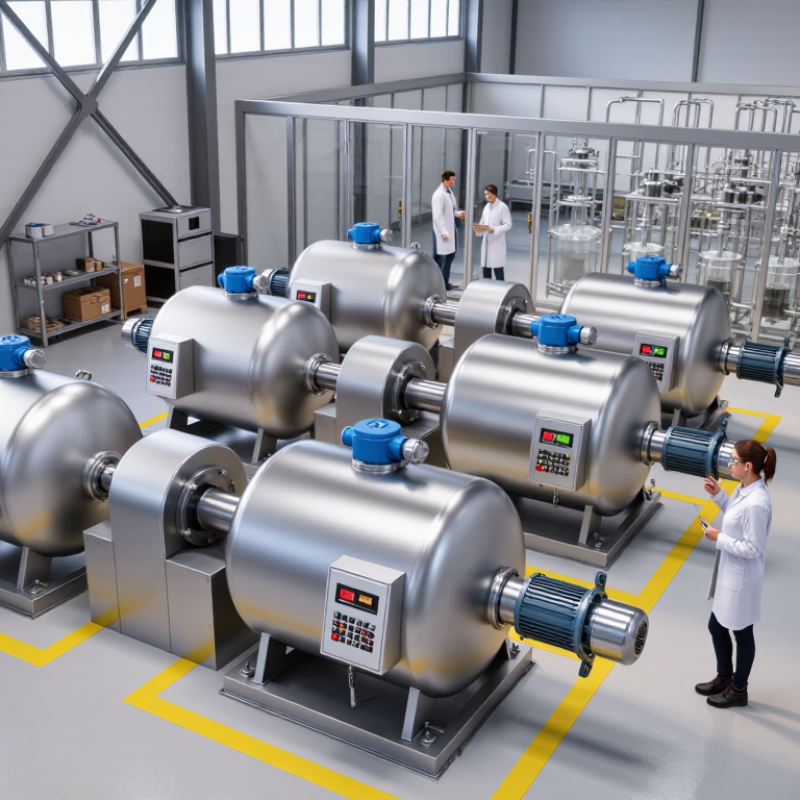
Comparing China’s mixing equipment manufacturers requires more than checking quoted prices.
UNIDO’s 2024 International Yearbook reports that China produced about 31% of global manufacturing value added in 2022. Scale is impressive. It is not proof of process competence.
Ask each supplier for batch records, material certificates, and documented factory acceptance tests. Inspect welds around the vessel, shaft alignment, seal design, and control-panel workmanship.
Performance should match your material.
Request trial data using your actual viscosity, solids content, temperature, and batch volume. A mixer that works with water may struggle with a dense slurry.
Measure mixing time, power consumption, discharge residue, and temperature rise. MarketsandMarkets places the industrial mixers market in the multi-billion-dollar range, with demand supported by chemical, food, pharmaceutical, and construction applications. Report boundaries vary, so treat market forecasts as direction, not proof.
Service separates similar quotations.
Compare spare-parts lists, remote diagnostics, technician response times, and commissioning procedures. Check whether drawings use consistent dimensions and whether software backups are supplied.
ISO 9001 certification can support reliability, but it cannot replace a witnessed performance test. A neat spreadsheet can still mislead.
I would score lifecycle cost, not only purchase cost, including energy, seals, downtime, and cleaning labor.
Some suppliers may offer excellent engineering yet communicate poorly in English. That weakness deserves a practical test: send a technical question and measure the clarity, speed, and completeness of the reply.