Choosing the best Crushing Equipment in China requires more than comparing prices, output rates, or brand popularity. A crusher that performs well in a dry limestone quarry may struggle with wet, sticky river stone. Material hardness, feed size, required product shape, power supply, and maintenance access all influence the final choice. Site experience matters.
Dr. Barry A. Wills, a respected mineral-processing authority and co-author of Wills’ Mineral Processing Technology, states, “The objective of mineral processing is to liberate and concentrate the valuable minerals.” This principle explains why crushing should never be judged separately from the complete processing flow. A jaw crusher may provide reliable primary reduction. A cone crusher can deliver more consistent secondary shaping. Impact equipment may suit softer stone and demanding cubic-particle requirements.
No machine wins every site.
Chinese manufacturers now offer broad equipment ranges, strong customization, and competitive engineering support. However, technical documents do not always reveal daily operating realities. Buyers should inspect wear-part quality, bearing protection, automation functions, after-sales response, and the supplier’s record with similar materials. A practical test using representative feed rock can expose problems before installation.
The “best” option may not be the largest or newest model. It should match the quarry’s geology, production target, budget, and operating skills. That sounds simple, yet it is often overlooked. This guide compares major Crushing Equipment types in China through performance, reliability, lifecycle cost, and field suitability. Some conclusions may remain imperfect, because every site behaves differently. That uncertainty deserves honest attention.
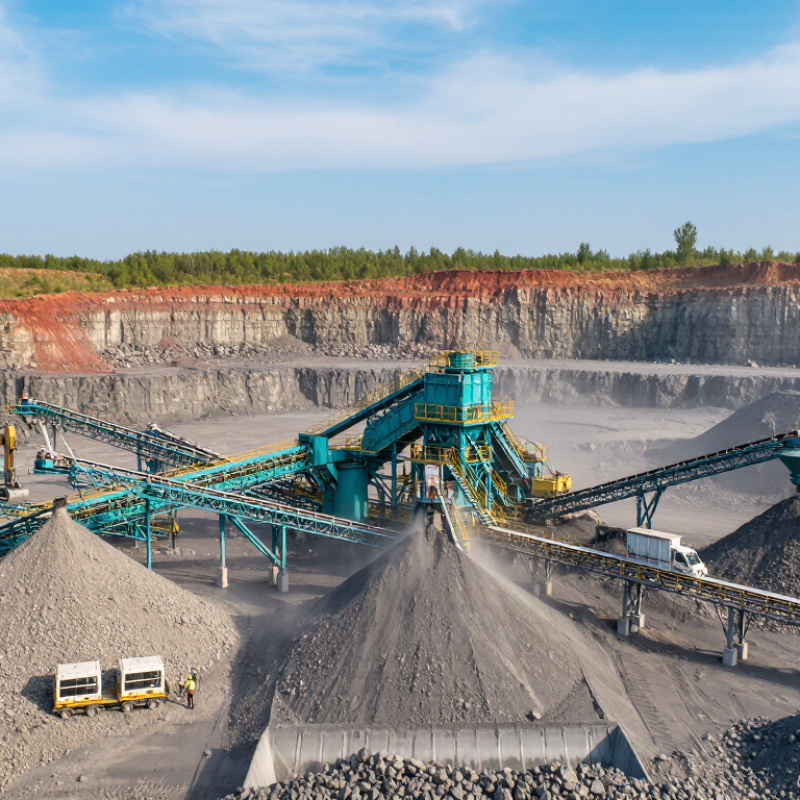
China manufactures several crushing equipment types for mining, aggregates, recycling, and cement production. Jaw crushers provide primary reduction for hard rock and large feed sizes. Cone crushers produce more uniform, finer aggregate after primary crushing. Impact crushers work well with limestone and recycled concrete. Hammer crushers suit softer, less abrasive materials. Mobile crushing plants add flexibility when material moves between work areas.
The demand is substantial. The U.S. Geological Survey reported China produced about 2.1 billion metric tons of cement in 2023. Grand View Research estimated the global crushing equipment market at roughly US$7 billion in 2023. These figures suggest strong industrial demand, but market size does not identify the best machine. Feed material decides that. Basalt can quickly wear impact surfaces, while damp clay may block a narrow chamber. Dust still matters.
A practical selection checks feed size, moisture, abrasiveness, reduction ratio, and required output. For example, a quarry processing dry granite may combine a jaw crusher with a cone crusher. A demolition site may prefer a mobile impact unit with magnetic separation. Operators should verify test results, spare-part access, energy consumption, and measured throughput. Catalog capacity can look impressive. It may not reflect real conditions. The most reliable decision comes from sample testing, documented operating data, and a clear maintenance plan.
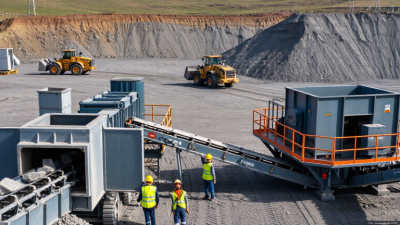
What Is the Best Crushing Equipment in China? The answer depends on site conditions, not catalogue claims. The USGS Mineral Commodity Summaries 2024 estimated United States crushed-stone production at about 1.5 billion metric tons in 2023. This scale shows why small efficiency differences matter. A crusher using 0.6 kWh per tonne may outperform a larger machine using 0.9 kWh per tonne, especially during long shifts.
Start with the feed material. Jaw crushers suit primary reduction of large rock. Cone or impact crushers can provide better shaping and finer output. Hard, abrasive granite needs stronger wear protection than softer limestone. Request a representative sample test. Measure feed size, moisture, capacity, product grading, power draw, and liner life. A perfect specification on paper can fail in a wet quarry. It happens.
Maintenance deserves equal attention. Check access around the crushing chamber, replacement time, spare-part availability, and local technical support. Dust suppression and noise control also affect operating reliability and worker safety. UNEP’s Global Resources Outlook 2024 reported that global material extraction could rise by 60% by 2060 from 2020 levels. That pressure makes energy use and equipment life more important. I would not choose the lowest purchase price without calculating cost per tonne across five years. A practical comparison should include electricity, wear parts, downtime, labor, transport, and resale value. The best crusher is the one that keeps producing consistent aggregate under real Chinese site conditions.
| Crusher Type | Typical Application | Suitable Material | Typical Feed Size | Typical Product Size | Typical Reduction Ratio | Main Advantages | Key Limitations | Best Selection Conditions |
|---|---|---|---|---|---|---|---|---|
| Jaw Crusher | Primary crushing in quarrying, mining and construction recycling | Hard and abrasive rock, concrete, recycled aggregates and ore | Up to approximately 1,000–1,500 mm, depending on equipment size | Approximately 50–300 mm | About 4:1 to 8:1 | Simple construction, strong crushing force, broad material compatibility and relatively easy maintenance | Usually produces a less cubical product and may require secondary crushing | Choose it when the feed is large, the material is hard, and a reliable primary stage is required |
| Gyratory Crusher | High-capacity primary crushing in large mines and major aggregate plants | Very hard, abrasive ores and large run-of-mine rock | Often above 1,000 mm; large units can accept very large run-of-mine feed | Approximately 100–300 mm | About 4:1 to 8:1 | Very high continuous capacity, good handling of large feed and stable operation | High capital cost, large installation footprint and complex maintenance requirements | Choose it for continuous, high-volume primary crushing where capacity justifies the investment |
| Cone Crusher | Secondary, tertiary and fine crushing in aggregates and mining | Hard and abrasive rock, crushed stone and metallic ores | Approximately 50–300 mm, depending on the crushing stage | Approximately 5–80 mm | About 3:1 to 6:1 per stage | Good product shape, efficient closed-circuit operation, adjustable discharge size and strong wear resistance | Requires controlled, relatively even feeding and performs poorly with excessive wet or sticky material | Choose it when consistent gradation, high capacity and a cubical aggregate product are important |
| Horizontal Shaft Impact Crusher | Primary or secondary crushing of aggregates and recycled materials | Limestone, soft to medium-hard rock, asphalt and concrete | Approximately 200–800 mm | Approximately 10–100 mm | About 10:1 to 20:1 | High reduction ratio, good particle shape and effective production of manufactured sand and fines | Blow bars and impact surfaces wear quickly when processing highly abrasive rock | Choose it when high reduction and cubical particles are needed and the feed is not excessively abrasive |
| Vertical Shaft Impact Crusher | Tertiary shaping, manufactured sand production and particle refinement | Aggregates, sand, limestone and moderately abrasive rock | Usually below 50–100 mm | Typically below 20 mm, including manufactured sand | About 5:1 to 10:1 | Excellent particle shaping, improved cubicity and effective control of fine aggregate production | Higher wear and energy consumption can occur with very hard or highly abrasive feed | Choose it after primary and secondary crushing when product shape or manufactured sand quality is critical |
| Double-Roll Crusher | Controlled-size crushing in coal, soft rock, limestone and industrial materials | Coal, clay, gypsum, salt, limestone and other relatively soft materials | Approximately 50–500 mm | Approximately 10–100 mm | About 3:1 to 6:1 | Low over-crushing, predictable product size, compact layout and relatively low dust generation | Not generally preferred for very hard, highly abrasive rock or very high reduction ratios | Choose it when controlled sizing and reduced fines are more important than maximum reduction |
| Mobile Crusher Plant | Temporary projects, road construction, demolition and changing work sites | Rock, concrete, asphalt and recycled construction materials | Depends on the integrated jaw, impact or cone crusher | Depends on the selected crushing configuration and screen setup | Depends on the installed crusher type | Fast relocation, reduced material transport, flexible process configuration and suitability for multiple sites | Higher purchase cost for mobility, limited space for components and possible transport restrictions | Choose it when the work site changes frequently or when hauling raw material to a fixed plant is inefficient |
Chinese crushing equipment is not judged by price alone. Performance depends on the material, required output, and working conditions. Jaw crushers suit hard feed and primary reduction. Cone crushers provide more uniform aggregate shapes. Impact crushers can deliver excellent cubic material, but their wear costs may rise with abrasive rock. A fair comparison should include capacity, power use, product size, and maintenance access. A machine producing 300 tons per hour may still underperform if frequent stoppages reduce actual production.
Tips: Request test results using material similar to yours. Check liner life, motor efficiency, safety features, and spare-part availability. Ask for measured noise and dust data. Do not trust capacity figures without feed-size details.
Purchase cost is only one part of ownership. Chinese crushers often offer competitive initial pricing, flexible configurations, and widely available replacement parts. However, cheaper equipment may require more frequent adjustments or operator attention. Inspect weld quality, hydraulic systems, electrical cabinets, and inspection records before signing a contract. Local service response also matters, especially at remote sites. A realistic calculation should include installation, transportation, wear parts, labor, energy, and lost production.
No comparison is perfect. Laboratory results may not match a wet quarry or a dusty construction site. Real site data remains more reliable than polished brochures. A small pilot test can reveal feeding problems, unexpected vibration, or faster-than-expected wear. That extra testing takes time, but it can prevent an expensive mistake.
The best crusher depends on the material, feed size, moisture, and required product shape. For hard rock such as granite or basalt, a jaw crusher usually handles primary crushing reliably. A cone crusher can then produce a more uniform aggregate for road construction or concrete. Limestone often responds well to impact crushing, especially when a cubical product is needed. Softer materials may require less crushing force and lower operating costs. However, “best” is not always the strongest machine. Oversized equipment can waste energy and increase maintenance pressure.
For sticky or wet materials, screen blockage can become a serious problem. A mobile crushing plant may suit short-term projects, while a stationary layout works better for stable, high-volume production. In practical plant assessments, I have seen good machines perform poorly because the feed was uneven or the discharge setting was ignored. That detail matters. Check the material’s compressive strength, abrasiveness, moisture, and maximum feed size before selecting equipment. Request a sample test and review capacity under realistic conditions, not ideal laboratory figures.
Tips: Compare wear-part costs, power consumption, noise control, and service access. Inspect the machine structure and safety systems carefully. Keep spare parts available. A crusher that is easy to maintain often outperforms a more powerful model. Local conditions may change the decision, and initial assumptions should be questioned before purchase.
The best crushing equipment depends on your material, capacity, and site conditions. Hard stone needs a strong chamber, stable feeding, and controlled discharge sizing.
In practice, safety should be checked before production targets. Look for fixed guards, accessible emergency stops, clear warning labels, and dust-control points.
Operators should receive practical training, not only printed instructions. Noise matters. A crusher that performs well but creates excessive vibration may damage nearby structures and increase fatigue.
Maintenance planning often separates reliable equipment from expensive downtime. Ask for inspection intervals, lubrication requirements, wear-part specifications, and realistic replacement times.
A supplier should provide drawings, operating manuals, and service contacts. Check whether critical parts are available in China and whether technicians can reach your site.
I have seen projects focus heavily on purchase price, then struggle with neglected bearings and poorly adjusted belts. That mistake is common, and it is avoidable, though maintenance estimates are sometimes too optimistic.
Tips:
Visit the supplier’s workshop if possible. Ask for test records using material similar to yours. Request references from comparable operations, not only large showcase projects. Review warranty limits, installation duties, response times, and training arrangements in writing. Confirm factory quality controls and applicable safety certifications. Keep a small stock of essential wear parts. Also, ask what happens when output falls below the promised range. A careful supplier will discuss limits openly, because no machine performs perfectly under every condition.