2026 Top Milling Equipment for Global Buyers?
Choosing the right Milling Equipment in 2026 requires more than comparing horsepower, capacity, and purchase prices. Global buyers now examine energy use, automation, maintenance access, operator safety, and verified production results. A machine that performs well in a clean test room may struggle with humid grain, abrasive minerals, or unstable power supplies. Real operating conditions matter.
This guide reviews leading milling solutions for food processing, feed production, grain handling, and selected industrial applications. It considers roller mills, hammer mills, pin mills, stone mills, and compact modular systems. Each category serves a different purpose. Not every advanced machine is the best investment. Sometimes, a simpler design delivers easier servicing and lower downtime.
We focus on evidence that buyers can check. Useful details include throughput ranges, motor efficiency, material compatibility, spare-parts availability, warranty terms, and supplier support. Independent testing remains valuable, but results should match your raw materials and target output. Ask for sample trials. Request maintenance records. Inspect the control cabinet and wear parts before signing a contract.
Regional requirements also influence equipment selection. Voltage, installation space, dust-control systems, food-contact materials, and local conformity documents can change the final cost. Reliable suppliers explain these limits clearly. Vague promises deserve caution.
This overview is practical, but it is not perfect. Product specifications change, and advertised capacity may depend on ideal conditions. Buyers should verify current data directly with manufacturers and qualified engineers. Careful comparison can reduce hidden costs and support a safer, more dependable milling operation.
2026 Milling Equipment Scope: Roller, Hammer, Jet, and CNC Mill Types
2026 Top Milling Equipment for Global Buyers?
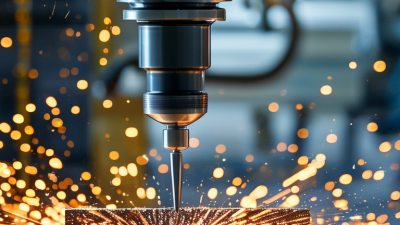
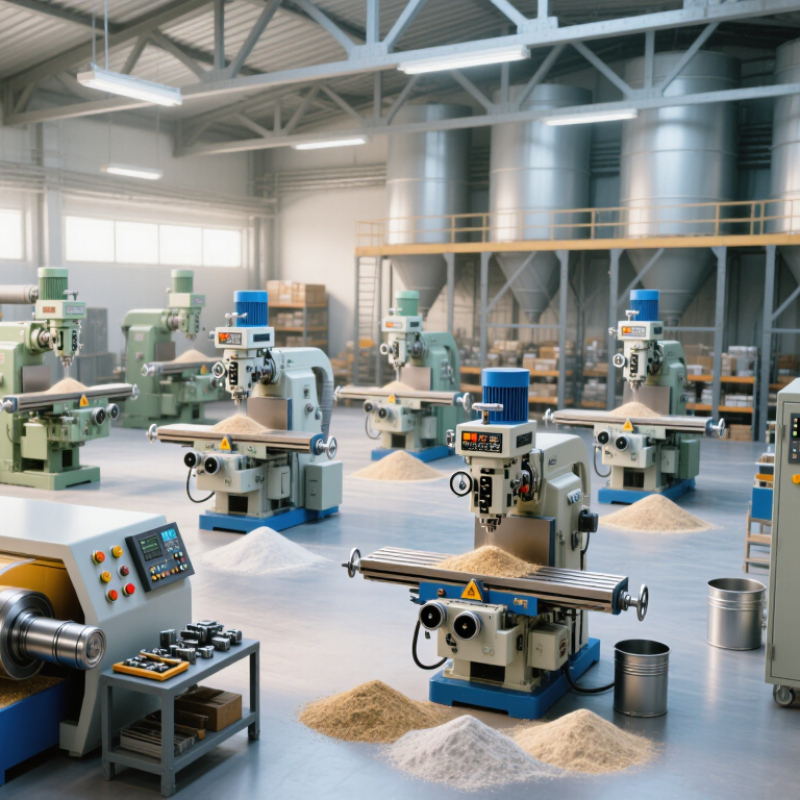
The 2026 milling equipment scope covers four distinct operating needs. Roller mills compress grain or minerals between rotating surfaces, supporting steady throughput and lower dust. Hammer mills use impact, making them practical for fibrous feedstock and rapid size reduction. Jet mills deliver ultra-fine particles through high-velocity air, but their energy demand deserves careful checking. CNC mills remove material with programmed cutting tools, offering repeatable profiles for metal and engineered components.
Market data supports continued investment. Grand View Research estimated the global CNC machine market at about USD 88 billion in 2023, with strong growth projected through 2030. For buyers, automation, spindle power, work-envelope size, and service access matter more than headline capacity. The U.S. Department of Energy reports that compressed-air systems can represent roughly 10% of industrial electricity use, making jet-mill efficiency and leakage control important cost questions. Power is costly.
A practical selection begins with the feed material, target particle size, moisture, production rate, and required tolerance. Roller systems suit continuous compression. Hammer systems tolerate more variable inputs. Jet systems require dependable air treatment and filtration. CNC mills need accurate fixturing, thermal stability, and operator training. Real factory trials remain essential. Catalog figures can mislead. Buyers should request measured energy use, final-size distribution, maintenance intervals, and noise data under comparable conditions. One overlooked issue is floor space for dust collection, conveyors, tooling, and safe access. Sources: Grand View Research, CNC Machine Market Report, 2024; U.S. Department of Energy, Improving Compressed Air System Performance, 2023.
2026 Top Milling Equipment for Global Buyers
The chart compares indicative installed-power ranges commonly used for equipment planning.
Roller and hammer mills cover broad industrial duties, jet mills generally require higher
energy intensity for fine grinding, and CNC mills typically use lower total machine power
but demand precise spindle and motion control. Actual specifications vary by capacity,
material, fineness target, and automation level.
Particle-Size Metrics: F80, P80, and Bond Work Index in kWh/t
2026 Top Milling Equipment for Global Buyers?
Particle-size metrics often reveal more than a mill’s advertised capacity. F80 means the feed size at which 80% passes, while P80 describes the final product. Record both in microns, not vague terms like “fine” or “coarse.” A plant receiving 180-micron feed and targeting 75-micron product faces a different duty from one treating 2,000-micron feed. Small measurement errors matter.
Bond Work Index expresses grinding resistance in kWh/t. It comes from a controlled laboratory test, not a guaranteed plant result. The 2024 SME Mineral Processing and Extractive Metallurgy Handbook stresses the need for representative samples and controlled testing. In practice, ore competency, moisture, circulating load, classification efficiency, and liner condition can shift power demand. Bond values are not permanent.
Check the sample twice.
The International Energy Agency’s Energy Technology Perspectives 2024 reports that industry uses roughly 37% of global final energy. That figure explains why buyers should compare specific energy, not only tonnes per hour. The USGS Mineral Commodity Summaries 2025 covers more than 90 mineral commodities, reflecting wide differences in ore type and processing conditions. Ask suppliers to show F80, P80, Bond Index, test method, and operating assumptions in one datasheet. A neat number can still hide a poor comparison.
2026 Top Milling Equipment for Global Buyers? - Particle-Size Metrics: F80, P80, and Bond Work Index in kWh/t
Typical engineering reference ranges for hard-rock and mineral-processing applications. Actual values depend on ore competency, moisture, circuit design, liner condition, classification efficiency, and operating practice.
| Equipment type |
Typical duty |
Typical feed F80 |
Typical product P80 |
Indicative Bond Work Index |
Common specific energy range |
Key buyer consideration |
| Primary jaw crusher |
Run-of-mine reduction |
500–1,200 mm |
100–250 mm |
8–25 kWh/t |
0.3–1.5 kWh/t |
Check maximum lump size, compressive strength, CSS adjustment, and required availability. |
| Gyratory crusher |
High-capacity primary crushing |
800–1,500 mm |
150–300 mm |
8–25 kWh/t |
0.2–1.2 kWh/t |
Evaluate continuous-feed capacity, foundation loads, maintenance access, and installation depth. |
| Cone crusher |
Secondary or tertiary crushing |
80–250 mm |
10–50 mm |
8–25 kWh/t |
0.5–2.5 kWh/t |
Compare reduction ratio, chamber selection, closed-side setting, tramp-release system, and liner life. |
| High-pressure grinding rolls |
Tertiary crushing or fine grinding |
25–70 mm |
3–12 mm |
8–25 kWh/t |
1.5–5.0 kWh/t |
Assess moisture sensitivity, roll-surface wear, edge effect, product agglomeration, and downstream classification. |
| Rod mill |
Coarse wet grinding and preparation |
10–25 mm |
500–2,000 µm |
8–25 kWh/t |
5–15 kWh/t |
Useful where controlled coarse product and reduced overgrinding are important; verify rod charge and mill length-to-diameter ratio. |
| Overflow ball mill |
Fine wet grinding in closed circuit |
5–15 mm |
75–250 µm |
8–25 kWh/t |
10–30 kWh/t |
Confirm circulating load, cyclone performance, ball size distribution, slurry density, and liner design. |
| Stirred media mill |
Fine and ultrafine grinding |
500–2,000 µm |
10–75 µm |
8–25 kWh/t |
15–60 kWh/t |
Often efficient for fine targets; examine media consumption, slurry rheology, feed size limit, and product-cooling requirements. |
| Vertical roller mill |
Dry grinding and classification |
20–100 mm |
45–150 µm |
8–25 kWh/t |
8–25 kWh/t |
Consider feed moisture, drying duty, separator efficiency, vibration control, and wear-part availability. |
Metric guide:
F80 is the particle size at which 80% of the feed passes. P80 is the particle size at which 80% of the product passes. The Bond Work Index (Wi) is an ore-resistance parameter reported in kWh/t; it should be determined by the appropriate Bond laboratory test rather than assumed from equipment type. Specific energy values shown are indicative circuit-level planning ranges, not guaranteed equipment performance.
Capacity Screening: 1–500 t/h Throughput, Motor Power, and Energy Use
2026 Top Milling Equipment for Global Buyers?
Capacity screening should begin with throughput, not the largest motor. A 1–10 t/h mill suits small plants, while 50–150 t/h systems require stable feeding, dust control, and spare capacity. Equipment rated near 500 t/h belongs to high-volume operations with continuous material flow. A sudden moisture increase can reduce real output sharply.
Motor power needs context. For example, a 110 kW drive producing 50 t/h uses 2.2 kWh per tonne at the drive level. Actual plant consumption will be higher. Conveyors, fans, separators, elevators, and air compressors also draw power. The European Commission’s 2019 Best Available Techniques reference document for food, drink, and milk industries recommends measuring energy across the process, not only at the main machine.
Energy performance deserves careful verification. The International Energy Agency reported that industry consumed about 37% of global final energy in 2022, making motor efficiency a practical purchasing issue. U.S. Department of Energy motor-system guidance also stresses correct sizing, maintenance, and variable-speed control. These measures can reduce waste, but savings depend on feed material and operating hours. A catalogue number can mislead. I would request measured tonnes per hour, kWh per tonne, motor load percentage, and test conditions. Those figures expose weak comparisons.
Global Compliance: CE, UL, ISO 9001, and IEC 60204-1 Requirements
For global buyers, milling equipment must meet more than cutting and output targets. Compliance documents often decide whether a machine can enter a market. CE marking supports access to the European Economic Area when applicable requirements are met. It is not a universal quality certificate. UL certification or listing may support acceptance in North American projects, but buyer requirements can differ. Ask for the exact certificate scope, model number, and issuing body. Do not accept a logo alone.
ISO 9001 indicates a documented quality management system, not automatic machine performance. Check inspection records, calibration controls, supplier evaluations, and corrective-action procedures. IEC 60204-1 addresses the electrical equipment of machinery, including protection, wiring, control circuits, and emergency stopping. Request the risk assessment, wiring diagrams, test results, and declaration of conformity. Details matter. A cabinet may look organized while its labeling remains incomplete. In practical procurement work, translated manuals and local electrical conditions are sometimes overlooked. That mistake can delay installation. Requirements also vary by destination, voltage system, and final application. Independent verification is wise when the documents conflict or appear outdated. Compliance reduces risk, but it cannot replace a factory acceptance test or operator training.